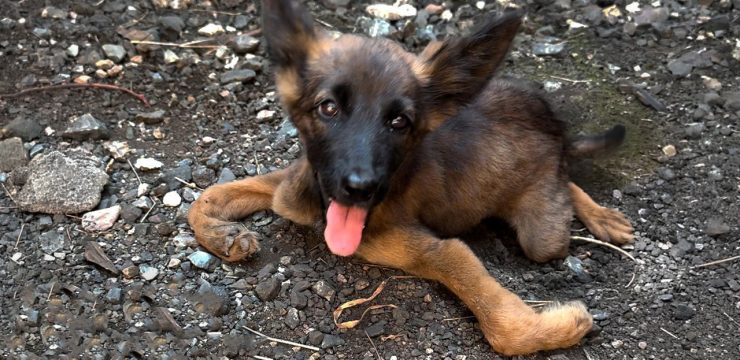
Aurora lay trembling on the side of a dusty road, her tiny body still, her eyes brimming with confusion and quiet pain. There were no visible wounds, no sign of a car accident or a fall. Yet she couldn’t move a single limb. Only her head, eyes, and tongue showed signs of life. She cried gently, unable to run, play, or even sit up—paralyzed and alone.
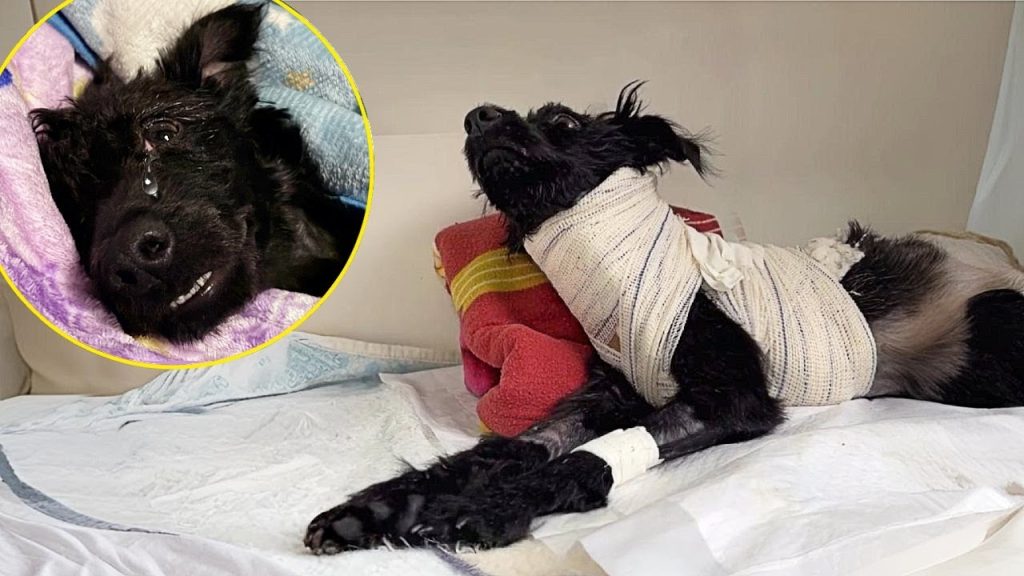
When rescuers found her, it was hard to comprehend what had happened. She was clean, seemingly well-fed, and showed no evidence of trauma, but all four of her legs were lifeless. The initial exams baffled local veterinarians. There were no broken bones, no spinal fractures. And yet, Aurora remained immobile. As specialists became involved, her case only grew more complicated. Touching her legs triggered a slight reaction—meaning she could still feel—but her body refused to respond. The possibility of recovery seemed remote.
One by one, neurologists reviewed her scans, her X-rays, her symptoms. Their conclusions were grim. Without a clear cause and with no movement in her limbs, some professionals began to suggest the unthinkable: euthanasia. They argued it would be a merciful end, sparing her from a life of stillness and suffering. But the rescue team refused. They had seen a spark in her—the will to live, the plea in her eyes. Giving up was not an option.
Their determination led them to a neurologist with years of experience handling rare canine conditions. He closely examined her scans and noted something others had missed. Her spine appeared normal, and so did the alignment of her vertebrae. The issue, he suspected, wasn’t with her back but with her brain. This opened up a new, albeit risky, path forward: brain surgery.
Aurora was prepped for an operation that carried more questions than answers. There was no guarantee she would walk again, or even survive. But something had to be done to relieve her chronic pain. The goal was simple yet monumental—give her comfort, give her dignity, give her the right to try. With steady hands and careful precision, the surgeon operated to relieve pressure within her brain—pressure believed to be interfering with her motor functions.
When she awoke from surgery, she was calm. No longer writhing in discomfort, Aurora rested quietly, her face serene. Though her legs didn’t suddenly spring to life, the agonizing pain that once defined her every moment had eased. It was the first true victory in her battle—not a cure, but a turning point.
From that moment on, her journey of recovery began in earnest. Every day, Aurora was gently exercised, her muscles stretched to prevent atrophy. Though her limbs remained still, her rescuers were relentless. They whispered encouragements, offered treats, and used soft tools to help her re-learn forgotten movements. They knew that physical therapy wasn’t just about movement—it was about hope, trust, and the slow rebuilding of a spirit broken by circumstances she never asked for.
In time, signs of change began to appear. Her neck grew stronger. She could turn her head fully now, not just lift it. Her eyes followed the voices she loved. And then one day, her hind legs twitched—so slight it would be easy to miss, but enough to bring tears to the eyes of everyone watching. It meant that somewhere deep inside, her nerves were beginning to reconnect. Her body was listening again.
Each small milestone became a celebration. When she could balance her head for longer than a few seconds, when her tail moved just a little, when she reacted to touch with more certainty—these were victories. Not loud, not dramatic, but deeply meaningful. In a world that often expects instant results, Aurora reminded everyone that progress can be quiet and slow, and that’s okay.
More importantly, she was no longer alone. She had people who believed in her, who saw her not as a lost cause but as a soul worth fighting for. They didn’t count her value in steps taken but in the light returning to her eyes. Aurora may not be chasing tennis balls or running through fields yet, but she is surrounded by love, warmth, and peace.
Her story is more than a tale of recovery—it’s a reflection of the strength that lives in the forgotten, the discarded, the underestimated. It’s a testament to what happens when we choose compassion over convenience, faith over fear. Aurora didn’t ask for a second chance, but when it came, she grabbed it with everything she had left.
At a time in life when many dogs are overlooked, especially those with special needs, Aurora’s journey reminds us that age, condition, or limitation do not define worth. She’s a symbol of perseverance, of gentle courage, and of the quiet power that love holds in the darkest of moments.
For anyone who has ever felt hopeless, Aurora’s story speaks to the heart. Not every battle is won with strength—some are won with patience, presence, and the unwavering belief that every life matters. She’s still on her journey, and no one knows exactly where it will lead. But one thing is certain: she’s no longer crying on the roadside. She’s surrounded by hands that hold her, voices that comfort her, and hearts that will never give up.
And sometimes, that is the most beautiful kind of rescue.