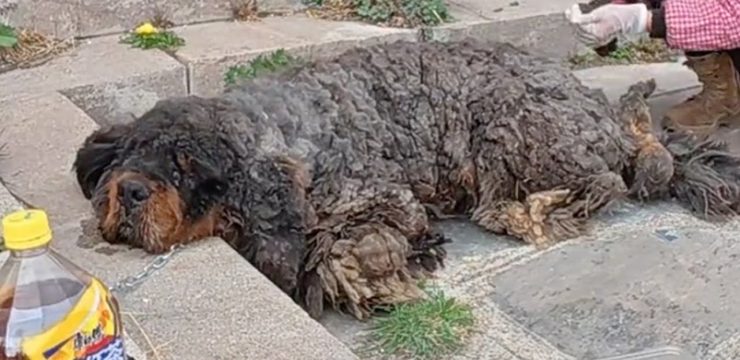
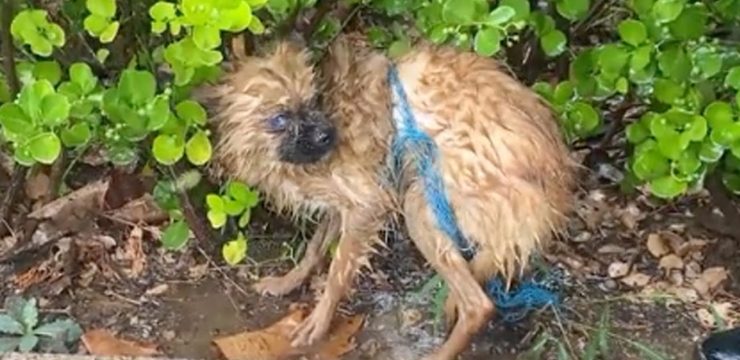
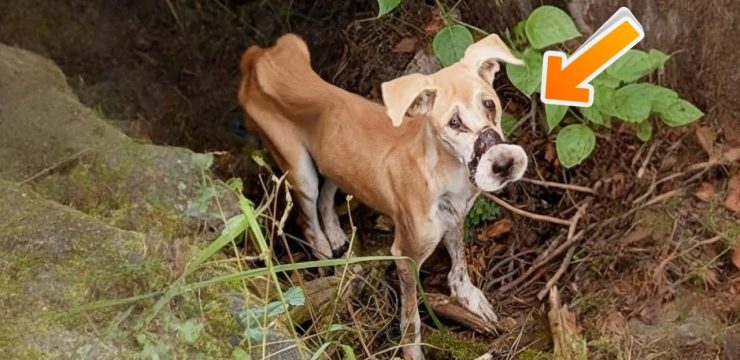
Phoenix’s journey began in a place of unimaginable suffering. When rescuers first found her, she was barely clinging to life—skin and bones, her ribs and spine painfully visible beneath her patchy coat. Malnourished and trembling, she had been surviving off scraps and garbage, each day a struggle just to stay alive. Her eyes, wide and hollow, spoke of fear, abandonment, and a heartbreaking lack of trust in people. She had known neglect for far too long, and every small movement from those around her made her flinch, unsure of whether harm or help would follow.
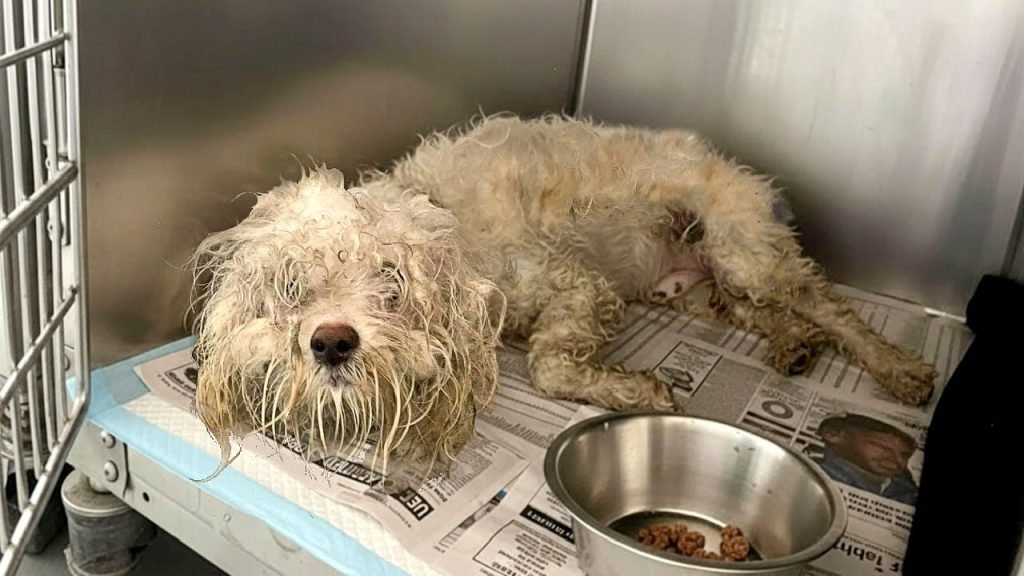
At first, Phoenix kept her distance. Human voices made her shrink, and outstretched hands caused her to retreat into corners. But something in her still flickered—some small spark of hope that hadn’t yet been extinguished. That fragile spark is what rescuers clung to. They didn’t force love upon her. Instead, they waited. They showed up each day with food, soft words, and gentle gestures, slowly proving that not all hands hurt. Their patience was the first step in Phoenix’s healing.
Veterinary care was urgent and ongoing. Her body was weak, ravaged by malnutrition and prolonged exposure. She received IV fluids, supplements, and small meals spread throughout the day to avoid overwhelming her fragile digestive system. The team monitored her closely, not just physically, but emotionally, too. Because Phoenix’s wounds weren’t just skin-deep—they ran into her soul. Her trauma couldn’t be fixed with medicine alone; it needed time, kindness, and connection.
As the weeks passed, signs of change emerged. Phoenix began to lift her head when someone approached. She stopped trembling when hearing footsteps. Her tail, once tucked so tightly it nearly disappeared, began to loosen ever so slightly. It was during these early victories that her caregivers knew—she wanted to come back to life. She just didn’t know how yet.
One of the most important parts of her recovery came not from people, but from other dogs. At the shelter, Phoenix met Norm and June, two gentle souls who had their own stories of survival. They didn’t push her, either. They simply existed nearby, offering a quiet companionship that Phoenix could learn from. Watching them play, sniff the grass, and seek affection helped her see a new world—one that wasn’t ruled by fear.
The first time Phoenix engaged with them was subtle. A glance. A shared moment near the water bowl. Then, one morning, she wagged her tail when Norm bounded past her. It wasn’t full of energy—it was tentative, cautious—but it was a tail wag nonetheless. Her caretakers stood still, watching, afraid that any reaction might cause her to shut down again. But she didn’t. She stayed. And from that moment, her progress began to pick up speed.
Soon, Phoenix was walking on her own with confidence. Her weight increased steadily, and her fur began to grow back in thick and soft. Her eyes lost that glassy stare and took on a new shine—one filled with curiosity. She no longer viewed every approach as a threat. Instead, she started greeting familiar faces with excitement. Her once guarded body language opened into an expressive, joyful presence.
It was during a quiet afternoon that Phoenix did something no one expected—she initiated play. She crouched low in front of June, tail wagging, eyes bright, and gave a little bounce. It wasn’t coordinated or graceful, but it was genuine. And it was everything. The shelter erupted in quiet celebration, a moment that had taken months to earn. For a dog who once wouldn’t lift her head, this small gesture was a leap.
Her transformation continued, day by day. Walks became adventures. Mealtimes turned into celebrations. Phoenix started to nap in the sun, belly exposed, trusting the world around her. She found safety not just in routine, but in connection. Volunteers who once had to sit yards away were now greeted with kisses and soft whimpers of affection. She learned to love, and in doing so, reminded everyone around her what resilience truly means.
By the end of her journey at the shelter, Phoenix looked like an entirely different dog. But more importantly, she felt like a new soul. The fear had melted away, replaced by trust. The despair had turned to joy. What once was a silent, shaking shell of a creature had become a vibrant, curious, and loving companion.
There is a moment, near the close of her story, when Phoenix stands in the middle of a sunlit field, ears perked, tail wagging in a rhythm of peace. The grass sways gently, birds chirp in the distance, and Phoenix breathes deeply—not in panic, but in calm. That image lingers long after the story ends, a quiet reminder of how healing begins with a single act of compassion.
Phoenix’s story is not just about rescue—it’s about redemption. It’s about the ability of living beings to recover from even the darkest pasts when given a chance. Her journey echoes in the hearts of those who have been broken and found a way to be whole again. It speaks to the quiet strength of second chances and the power of love that asks for nothing in return.
For those who watched her transformation, Phoenix became more than a survivor. She became a symbol of hope. Of endurance. Of what’s possible when we show up for the voiceless, when we choose to see potential in pain, and when we refuse to give up—no matter how hopeless something may seem.
Her name, Phoenix, was not a coincidence. Like the mythical bird that rises from the ashes, she rose—reborn not just in body, but in spirit. And though her scars may never fully fade, they now tell a different story: one of survival, healing, and the kind of beauty that comes only from overcoming.
For anyone who’s ever felt broken, abandoned, or too far gone, Phoenix is proof that it’s never too late to begin again.