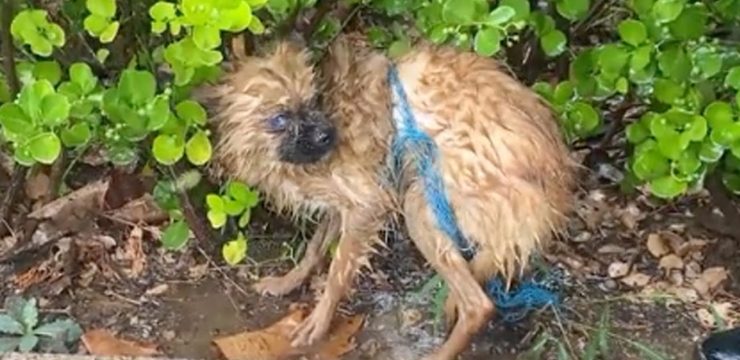
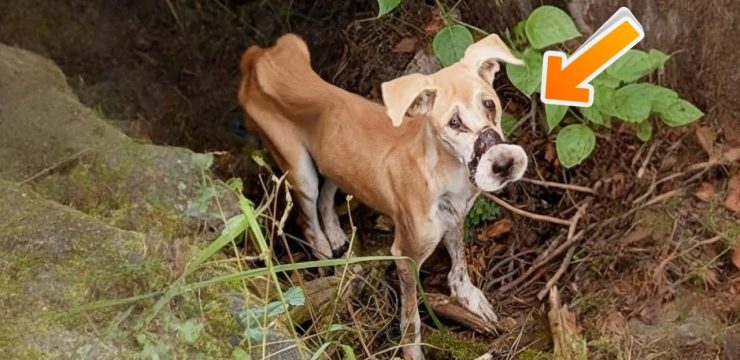
In the quiet of a modest home, behind a closed bedroom door, a scene of unimaginable suffering was unfolding. Thirty-two small dogs were found crammed into a single filthy room, their lives reduced to a relentless cycle of confinement, neglect, and forced breeding. They had spent what seemed like a lifetime in that dark, airless space—surrounded by cockroaches, soaked in their own waste, and completely cut off from the basic dignity all living beings deserve.
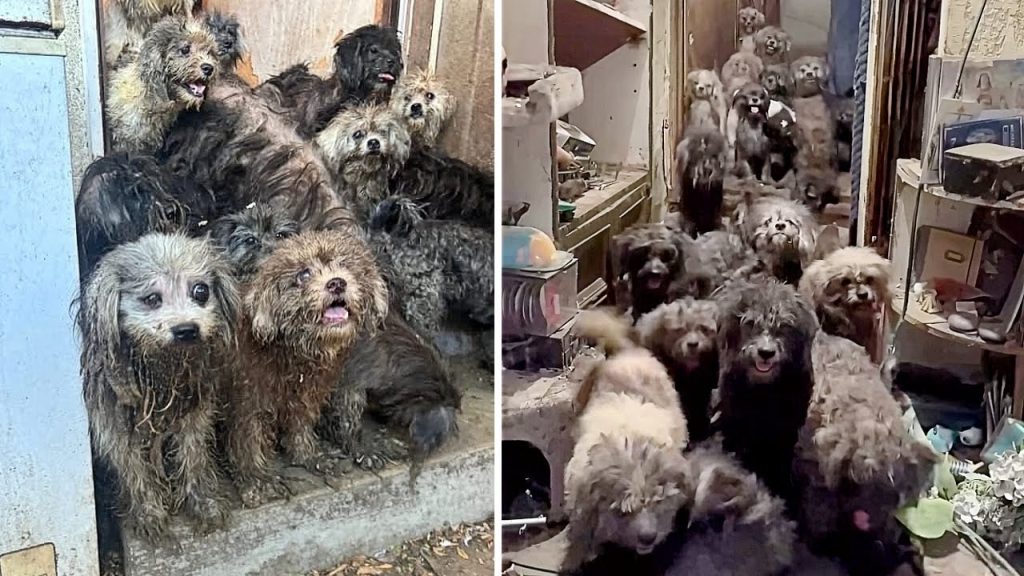
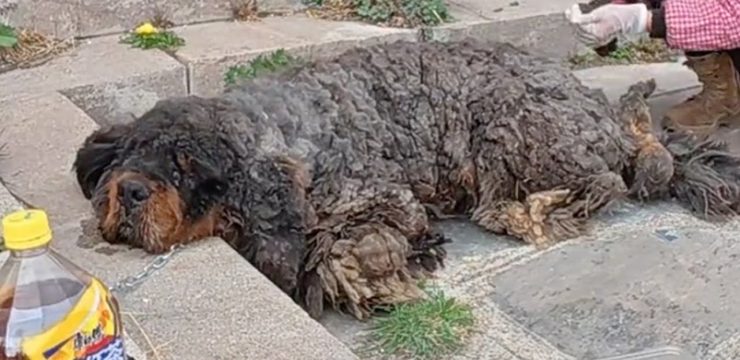
The rescuers who entered the room were struck silent. The stench was overpowering. The dogs—once meant to be beloved companions—had become prisoners of profit. Their fur was so matted and tangled with feces and urine that many could barely move. Some had hardened masses of filth hanging from their bodies that hit the ground with a hollow, clip-clop sound as they tried to walk, mimicking the hooves of horses. It was a sound that would haunt anyone who heard it.
Beyond the filth and confinement, the physical health of the animals was gravely concerning. Many of the dogs showed signs of long-term medical neglect. Their teeth were rotted to the gums, causing constant pain and making it difficult for them to eat. Several were suffering from severe eye infections, with cloudy or bulging eyes suggesting the need for surgical removal. Others were visibly pregnant, their frail bodies forced to carry yet another litter despite being in no condition to do so.
These weren’t just dirty animals—they were broken, both in body and spirit. Years of neglect had stripped them of their natural instincts to play, trust, or even hope. When the rescuers reached out, many of the dogs cowered, unsure whether this touch would bring harm or help. Some pressed themselves against the wall, trembling. Others stared blankly ahead, as if their minds had shut down long ago just to survive.
Every corner of that room told a story of suffering. The water bowls were bone dry. There were no toys, no bedding, no ventilation. Just a layer of filth on every surface and the endless sound of anxious whimpers. These dogs had never known grass under their paws or fresh air on their faces. They had never gone for a walk, never played fetch, never felt the loving touch of a gentle hand without strings attached. They existed only to breed—and to suffer in silence.
The rescue team worked quickly and compassionately, cradling the dogs one by one and bringing them out into the light. Many had to be carried, their legs too weak or their mats too thick to walk. As each dog was placed into a crate lined with clean blankets, there was a small flicker of something unfamiliar in their eyes—perhaps relief, perhaps fear, perhaps both. The journey from that house to the veterinary clinic was quiet, but heavy with emotion.
At the clinic, teams of veterinary professionals were standing by. The dogs received emergency care: baths to remove layers of waste, fluids to rehydrate them, pain relief, and thorough exams to assess the extent of their injuries. One by one, the dogs began the long road to healing. Some would need surgeries. Others would need weeks or months of recovery. But for the first time in their lives, they were safe.
What made this rescue so deeply unsettling wasn’t just the physical conditions. It was the complete emotional and psychological abandonment these animals had endured. They were not simply neglected; they were used, over and over again, with no regard for their well-being. And yet, even after all they had been through, they still wanted to connect. Even the most frightened among them, after a few hours in a clean, warm space, began to show signs of curiosity, of resilience, of hope.
The rescuers knew that justice had to be part of the story. This wasn’t just a matter of poor conditions or irresponsible ownership—it was a clear, deliberate pattern of cruelty and exploitation. They called for the person responsible to be held accountable. Not out of vengeance, but out of a deep belief that those who harm the vulnerable—especially for profit—must face real consequences. This was not an accident. It was a system, a setup, a cold business model that traded suffering for dollars.
As the days went on, updates began to pour in. Some of the dogs were placed in foster care, where they learned to walk on grass for the first time. Others began wagging their tails, tentatively at first, then with joy. They received new names, new beds, and above all, new chances. Slowly, the weight of their past began to lift.
But not every story ends quickly. Some dogs were so badly damaged that their recovery would take much longer. And some, despite the best efforts of vets and volunteers, would carry the scars of their past forever. That’s the heartbreaking truth of rescue—not every wound can be healed. But every effort, every kind touch, every moment of compassion still matters. Because for the first time in a long time, these dogs were being seen. They mattered.
This story is not just about 32 dogs—it’s about the responsibility we all share. About the hidden corners of our society where cruelty is allowed to fester, often out of sight. About how easy it is to look away. And about how vital it is that we don’t.
We owe it to these animals—and to ourselves—to speak out, to report abuse, to support rescue organizations, and to demand better laws and stronger enforcement. Because no living creature should ever endure what these dogs did. And because change begins not just with rescue, but with justice.
Let their story be a call to action. Let it remind us that behind every closed door, there could be a silent cry for help waiting to be heard. And let us never be the kind of world that turns away from it.