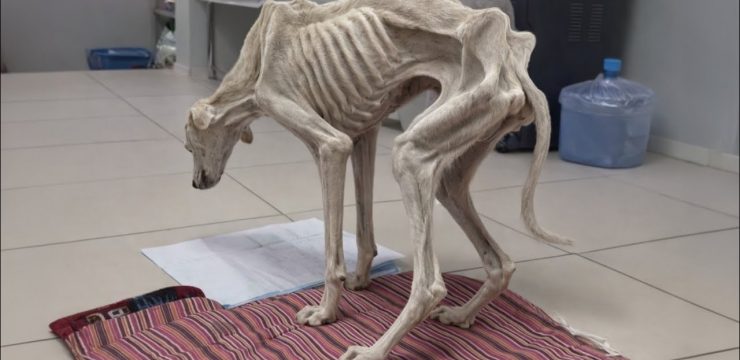
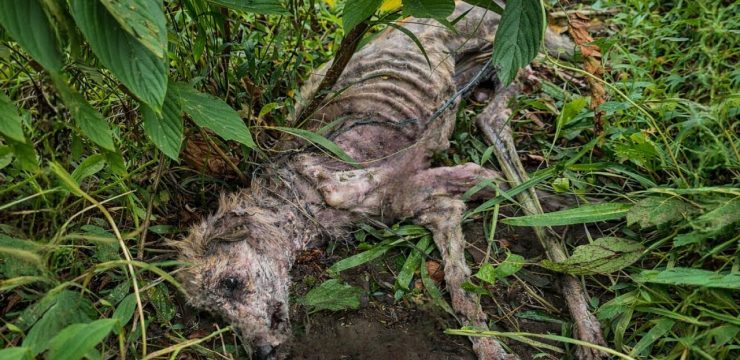
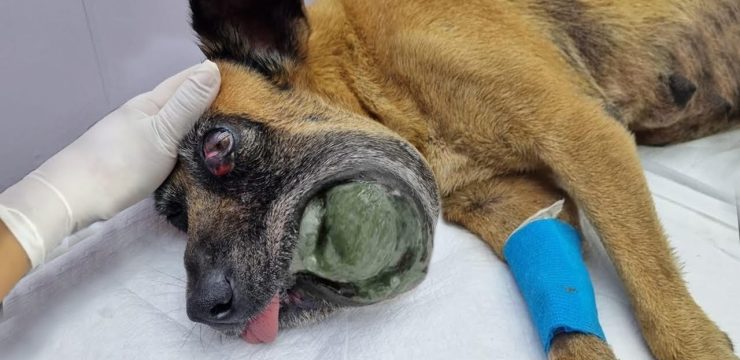
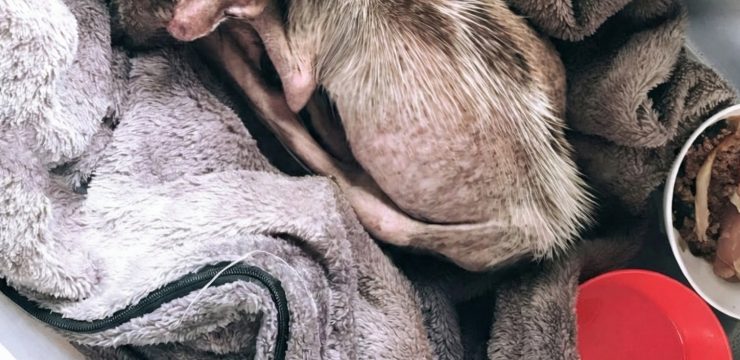
An orphaned puppy lay trembling beneath the weight of a massive parasitic infestation, his tiny body overwhelmed by thousands of ticks and fleas that clung to him relentlessly. When rescuers first brought him in, the little survivor—affectionately nicknamed “Ticky Ticky”—was barely holding on. He was severely malnourished, dangerously weak, and so drained of blood that his gums had faded to a ghostly white. Every inch of his fragile frame told the story of neglect and isolation.
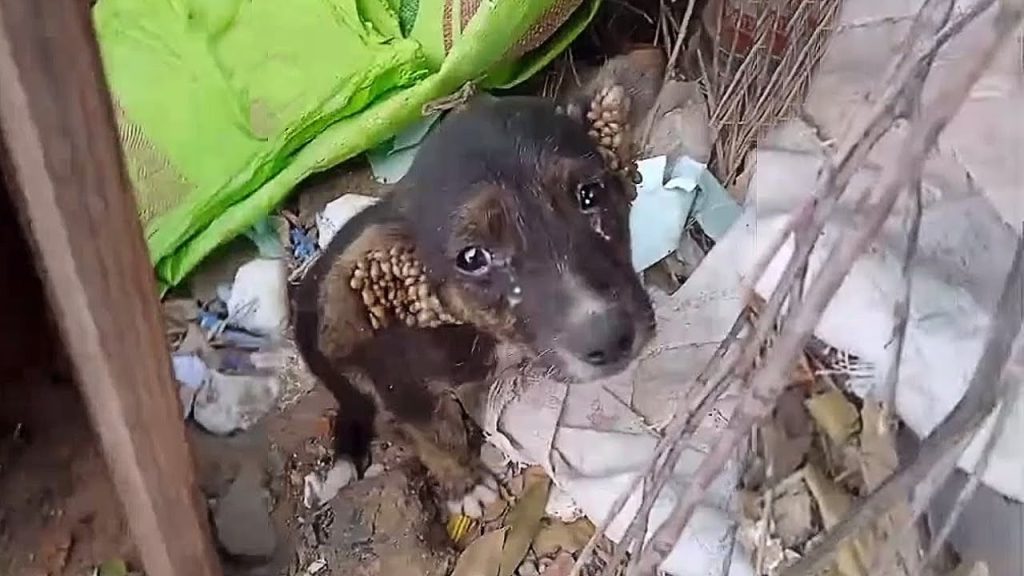
There are moments in animal rescue that test even the most seasoned caregivers, and this was one of them. Ticky Ticky’s condition was not only heartbreaking but medically urgent. The parasites covering his small body were feeding continuously, robbing him of the nutrients and strength he desperately needed. For a puppy so young and defenseless, the infestation posed a life-threatening risk. Without swift and careful intervention, he might not have survived much longer.
Yet what stood out most in those first fragile hours was not just the severity of his condition, but the tenderness with which he was handled. The veterinary team understood that removing the ticks manually—pulling them out one by one—could tear his delicate skin and invite dangerous infections. His immune system was already compromised; any additional trauma could push him further into crisis. Instead of rushing or choosing a harsher method, they opted for a specialized medical spray designed to eliminate the parasites safely and gently.
This approach required patience. It required trust in the process. And above all, it required compassion. For older animal lovers who have seen how easily fragile lives can slip away, the decision to treat him with such care speaks volumes. It was not about speed. It was about doing what was safest for a body already pushed to its limits.
As the spray began its work, the parasites gradually released their hold. The relief for the puppy was not immediate, but it was steady. Within a day, the first encouraging signs appeared. The pale, almost translucent color of his gums slowly shifted toward a healthy pink, signaling that his circulation was improving. That single change, subtle yet profound, offered a glimmer of hope to everyone watching over him.
Soon after, Ticky Ticky began to show small but powerful signs of resilience. He lifted his head a little higher. His eyes, once dulled by exhaustion, began to focus with more clarity. Most importantly, he found enough strength to start eating solid food on his own. For any caregiver, there is something deeply reassuring about seeing a weakened animal choose to eat. It is often the first clear declaration that the will to live is stronger than the hardship endured.
Malnourishment and severe parasite infestations can take a tremendous toll on a young animal’s body. Blood loss from ticks can lead to anemia, weakness, and even organ failure if left untreated. Fleas, too, can cause intense irritation and further blood depletion. In Ticky Ticky’s case, the infestation had progressed to a point where every ounce of energy mattered. That is why the veterinary team’s careful protocol—stabilizing him gently rather than aggressively—proved so crucial.
Beyond the medical details lies a broader lesson in compassion. For many readers, especially those who have spent decades caring for family, pets, or loved ones, this story resonates on a deeper level. It reminds us that healing often requires restraint and wisdom. Sometimes the strongest act of care is choosing the gentlest path.
Day by day, Ticky Ticky’s transformation continued. His body began to fill out as nourishment replaced depletion. His coat, once dulled and burdened by parasites, started to regain softness and life. Though still small and vulnerable, he no longer looked like a puppy on the brink. Instead, he appeared like one stepping carefully into a second chance.
Rescue stories often highlight dramatic moments, but what makes this journey remarkable is its quiet persistence. There were no miracles delivered overnight. There was medical expertise, attentive monitoring, and unwavering kindness. Each improvement was earned through consistent care. Each sign of recovery reflected the resilience woven into even the smallest living beings.
For those who have walked through their own seasons of hardship, Ticky Ticky’s recovery carries a familiar truth: strength can return, even after profound depletion. Healing may begin with something as small as a shift in color, a renewed appetite, or the ability to stand a little steadier than the day before.
By the end of his journey, the once-orphaned puppy was no longer defined by the parasites that nearly overwhelmed him. He had survived. More than that, he was preparing for the next chapter of his life—a forever home where safety and love would replace fear and neglect.
His story stands as a testament to resilience and to the power of thoughtful, humane intervention. It honors the veterinarians and rescuers who chose patience over haste, protection over risk, and compassion over convenience. And it reminds us, perhaps most importantly, that even the most fragile lives can flourish when given careful attention and a chance to heal.
Ticky Ticky’s path from desperation to stability does not erase what he endured. Instead, it transforms that suffering into meaning. In a world where neglect can so easily go unseen, his survival shines as a quiet but powerful affirmation: kindness, applied with knowledge and care, can change the trajectory of a life.