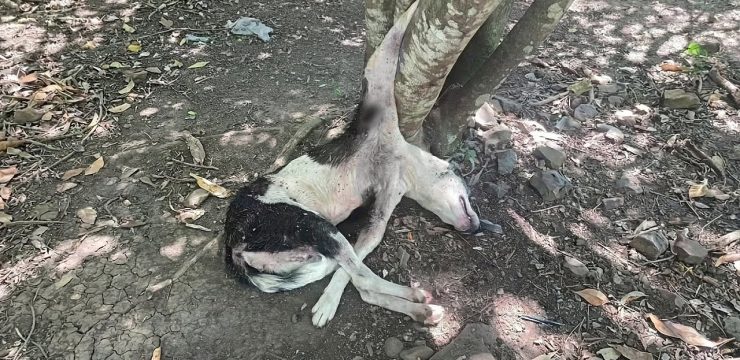
Left behind after her owners passed away, a once-loved dog slipped quietly into a world of loneliness and neglect. No one came back for her. No one noticed how quickly her body began to fail. By the time rescuers found her, she was barely recognizable as the healthy companion she had once been. Her frame was skeletal, her ribs sharply defined beneath thinning skin, and her eyes carried a hollow look that spoke of hunger, confusion, and fading hope.
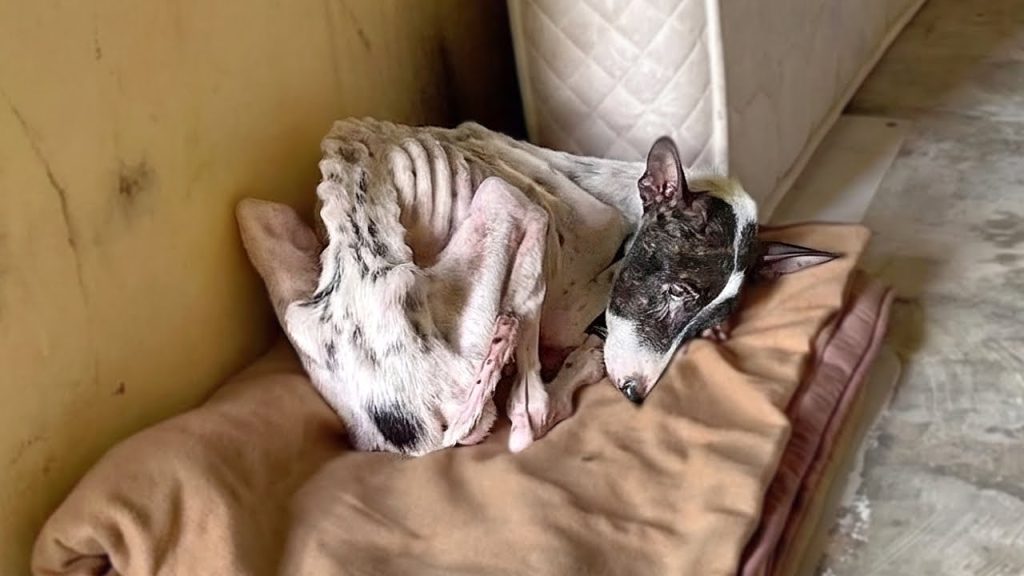
She had not only lost her home. She had lost the hands that once fed her, the voices that once called her name, and the gentle reassurance that she mattered. Without regular meals or basic care, her strength drained away day by day. Those who first approached her described a heartbreaking sight: a fragile body trembling under the weight of neglect, too weak to move with confidence, yet somehow still holding on.
There was no anger in her expression. No aggression. Just exhaustion. She seemed to exist in survival mode, conserving what little energy remained. Hunger had become her constant companion. So had silence. It was the kind of suffering that doesn’t shout, but whispers.
When rescuers stepped in, they knew the road ahead would not be easy. Malnourishment at that level affects more than appearance. It impacts muscle tone, immune function, organ health, and emotional stability. She lacked basic strength, and even standing for long periods seemed to cost her dearly. Yet the team refused to see her as a lost cause. They saw possibility in those weary eyes.
The first days were focused on stabilization. Small, frequent meals replaced long periods of emptiness. Clean water was always within reach. Veterinary professionals carefully monitored her vitals, ensuring that her refeeding process was safe and gradual. Too much, too fast, could cause harm. Healing required patience.
Even the simplest activities were exhausting for her. A short, slow walk left her panting heavily, searching for water and relief. Her muscles, long deprived of nourishment, struggled to carry her weight. Each step was effort. Each breath seemed deliberate. But she kept trying.
That determination became the quiet heartbeat of her recovery.
Alongside medical care came something equally important: affection. Gentle voices replaced silence. Soft bedding replaced cold ground. Hands reached out not to take, but to comfort. Over time, her body began responding to consistent nourishment. Subtle changes appeared first. A little more steadiness in her stride. A little less trembling when she stood.
Week by week, her weight increased in a healthy, monitored way. She began to fill out, slowly rebuilding muscle and restoring what starvation had taken. What had once been a frail seven kilograms gradually transformed into a strong, balanced twenty kilograms. The numbers told a remarkable story, but her eyes told an even deeper one.
The emptiness faded.
In its place came curiosity. Awareness. A spark of trust.
Healing is rarely dramatic. It unfolds in small victories. The first time she finished a full meal without hesitation. The first time she wagged her tail in response to a kind word. The first time she walked a little farther without collapsing in fatigue. Each moment felt monumental to those who had witnessed her lowest point.
Her coat, once dull and lifeless, began to shine. Proper nutrition nourished not just her muscles, but her skin and fur. Her posture changed as strength returned. She no longer carried herself like a shadow. She stood taller, steadier.
Emotionally, she shifted too. Dogs are deeply sensitive creatures. They bond through routine, touch, and trust. When those bonds are broken, the impact lingers. But with steady kindness, she learned again that people could be safe. That hands could comfort. That voices could soothe.
By the end of her rehabilitation, the transformation was undeniable. The dog who once seemed to be fading had become vibrant and alert. Her body reflected health. Her spirit reflected renewal. Where there had once been a fragile frame barely clinging to survival, there now stood a resilient animal full of life.
Her journey serves as a powerful reminder for all of us, especially those who understand the depth of lifelong commitment. Pets are not temporary companions. They rely on us completely. When circumstances change, they cannot advocate for themselves. They wait. They endure.
In her case, compassionate intervention changed the trajectory of her life. Medical care provided stability. Proper nutrition rebuilt her strength. Steady affection restored her confidence. None of it happened overnight. There was no single dramatic moment. Only consistent love applied day after day.
What makes her story so moving is not just the physical transformation, but the emotional one. To witness a being move from despair toward joy is to witness resilience in its purest form. It reminds us that healing, though sometimes slow, is always possible when dedication and compassion meet need.
For older audiences who have seen seasons of life come and go, her journey carries a familiar truth: hardship does not have to define the ending. Loss does not have to determine the future. Even after profound absence, renewal can occur.
She began as a forgotten soul, weakened by grief and hunger. She ended as a testament to what attentive care can accomplish. Her shining coat and bright eyes are not simply signs of physical recovery. They are symbols of restored dignity.
No matter how dark the moment may seem, the right combination of patience, responsibility, and love can bring a fragile life back from the brink. Her story stands as quiet proof that compassion is not abstract. It is practical. It feeds. It heals. It rebuilds.
And sometimes, it brings a fading soul fully back into the light.