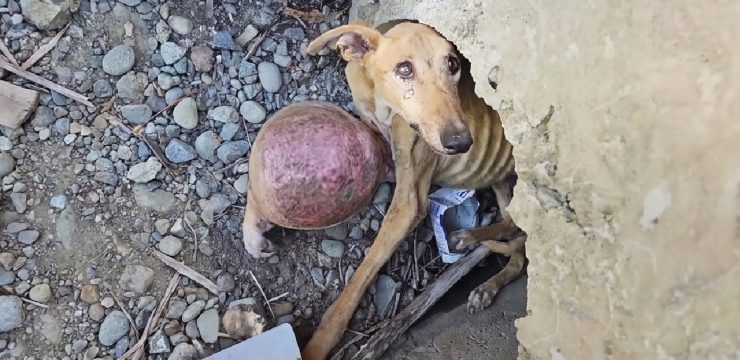
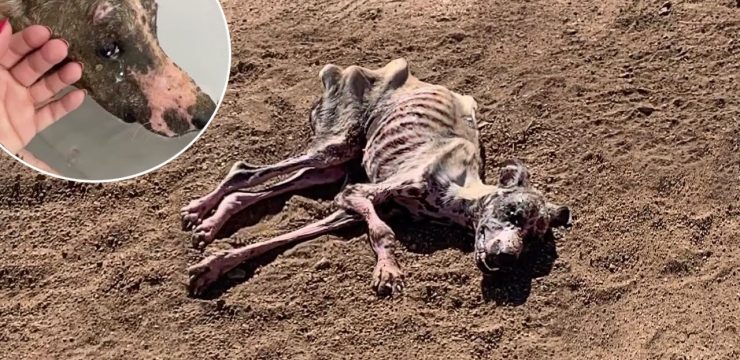
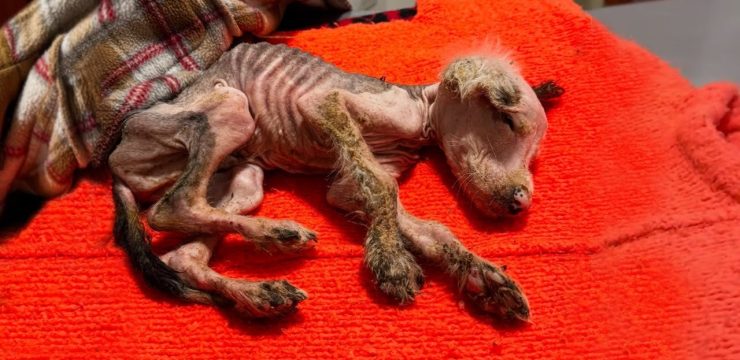
Soberanito’s story begins in a place no living creature should ever know—discarded, bound, and left behind as if his life carried no value at all. Abandoned by the very person who once claimed him, he was found tied inside a plastic garbage bag, barely clinging to life. What rescuers discovered was not just a dog in distress, but a soul pushed to the brink of surrender.
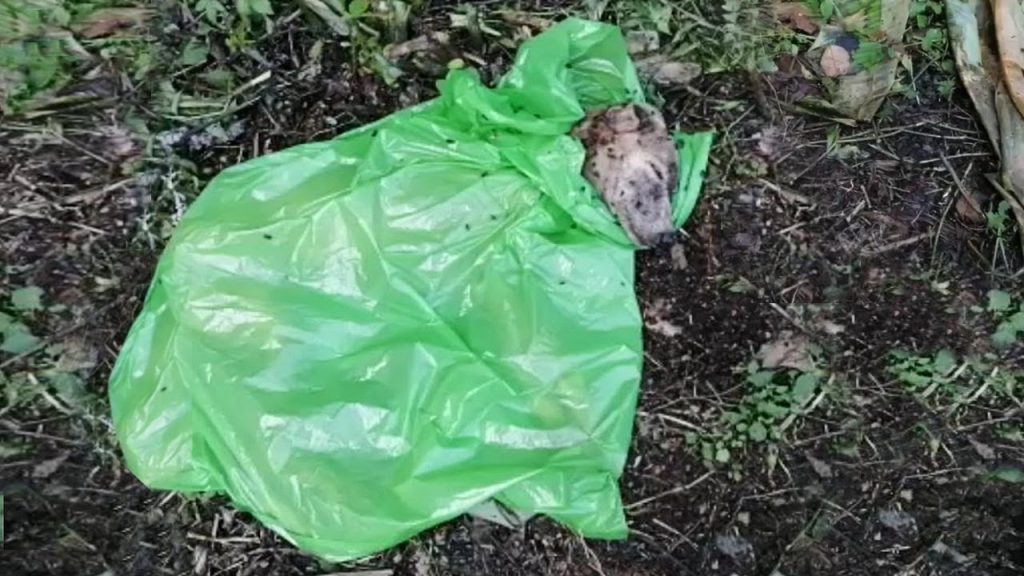
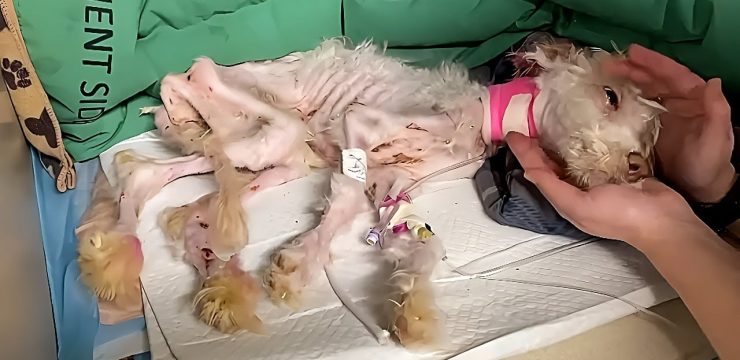
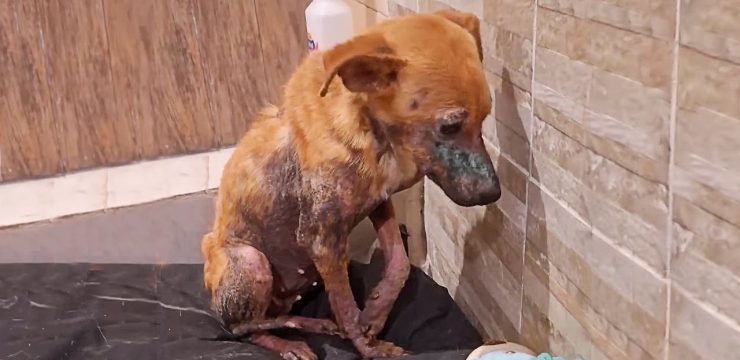
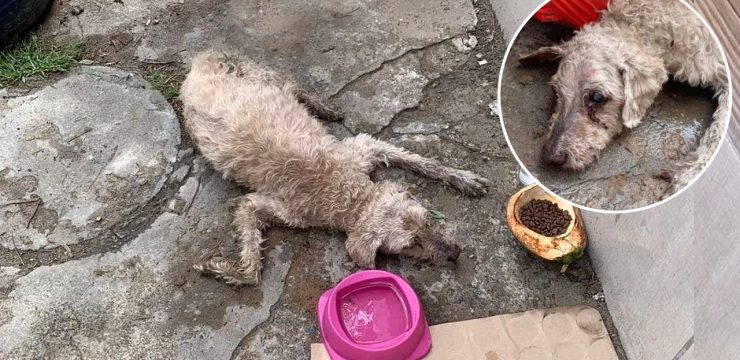
When help finally arrived, Soberanito was in devastating condition. His body was painfully thin, every rib visible beneath fragile skin. He was severely dehydrated, too weak to lift his head with confidence. The light in his eyes had dimmed to almost nothing, as though he had already accepted that the world had given up on him. The physical damage was extensive. A severe infestation had taken hold, causing deep wounds and infection, especially around his mouth and ears. His suffering had gone untreated for far too long.
At the veterinary clinic, the medical team immediately recognized the urgency of his situation. He required intensive care just to survive the first critical days. Intravenous fluids were administered to stabilize him and combat dehydration. Strong antibiotics were started to fight systemic infection. Each day, his wounds had to be carefully cleaned, removing damaged tissue to give healthy skin a chance to regenerate. The process was slow and often uncomfortable, but it was necessary. Every treatment was performed with steady hands and quiet determination.
In those early moments, Soberanito barely reacted. He lay still, conserving what little strength remained. Yet the rescue team refused to see him as a lost cause. They spoke to him softly. They handled him gently. They treated him not as a burden, but as a life worth saving. Compassion became just as important as medicine.
Something remarkable began to happen in the days that followed. Beneath the weakness and trauma, a spark of resilience flickered. Soberanito started responding to touch. His eyes tracked movement in the room. He attempted small shifts in position, as though testing whether his body would cooperate. The medical staff noticed these subtle changes immediately. They celebrated each one, no matter how small.
Gradually, his strength began to return. His appetite, once nonexistent, showed the first signs of revival. With encouragement, he started to eat on his own. Nutritional support played a vital role in rebuilding his body. As hydration levels improved and infection came under control, his blood work reflected steady progress. Numbers that had once signaled danger began to move toward stability.
The swelling in his legs, once pronounced and painful, slowly subsided. Standing was an enormous effort at first. His legs trembled under his own weight. But he tried. And then he tried again. One day, with careful support nearby, Soberanito managed to rise and remain upright for a few brief seconds. That small victory carried enormous meaning. It was proof that his will to live had returned.
Walking came next. What began as hesitant steps turned into cautious movement across the clinic floor. The same dog who had arrived unable to lift his head was now reclaiming control over his body. The transformation was not instant or effortless. It required patience, consistent care, and an extraordinary amount of heart from those who refused to let him fade away.
Throughout his recovery, kindness surrounded him. Gentle hands continued daily treatments. Soft voices replaced silence. Where there had once been abandonment, there was now unwavering commitment. Soberanito responded in kind. His eyes regained expression. He began looking directly at the people who saved him, no longer with resignation, but with quiet trust.
The damage to his lips remained a visible reminder of what he endured. Future reconstructive surgery was planned to repair that final physical scar. Yet even before that procedure, his spirit had already undergone profound restoration. He was no longer the silent, defeated figure inside a garbage bag. He was a survivor.
Soberanito’s journey is not simply about medical intervention. It is about the extraordinary resilience that can emerge when compassion meets determination. It is about second chances—how they are built not from grand gestures, but from consistent acts of care repeated day after day.
For many who witness stories like his, the emotions run deep. There is sorrow for what he suffered. There is anger at the cruelty that placed him there. But above all, there is gratitude for the people who step forward when others walk away. Animal rescue is rarely easy. It demands emotional strength, financial sacrifice, and tireless dedication. Yet stories like Soberanito’s remind us why it matters.
Today, he stands as living proof that even the most fragile life can recover when given opportunity and love. His once-empty eyes now hold awareness. His body, once skeletal and failing, carries renewed vitality. The road ahead still includes healing and surgical repair, but the foundation is solid. He has chosen life, and life has chosen him back.
In a world that can sometimes feel overwhelming, Soberanito’s story offers something steady and reassuring. It shows that cruelty does not have the final word. Compassion does. It shows that resilience can bloom even in the aftermath of profound neglect. And it reminds us that every act of mercy—no matter how small—has the power to transform despair into hope.
Soberanito was left behind, but he was not forgotten. And because someone cared enough to act, his story did not end in silence. It became a testament to survival, to healing, and to the quiet strength of those who refuse to give up on the vulnerable.