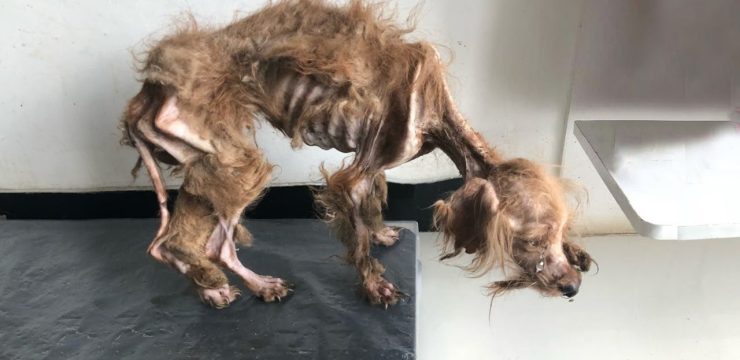
Whimsy, an emaciated Pitbull mix, was pulled from a shelter in a state that would stop anyone in their tracks. Her small body was covered in old scars, silent reminders of hardship no animal should endure. At just 15 pounds, she was dangerously underweight, her bones sharply visible beneath thinning fur. She looked fragile, but there was something in her eyes—something soft and searching—that hinted she had not given up.
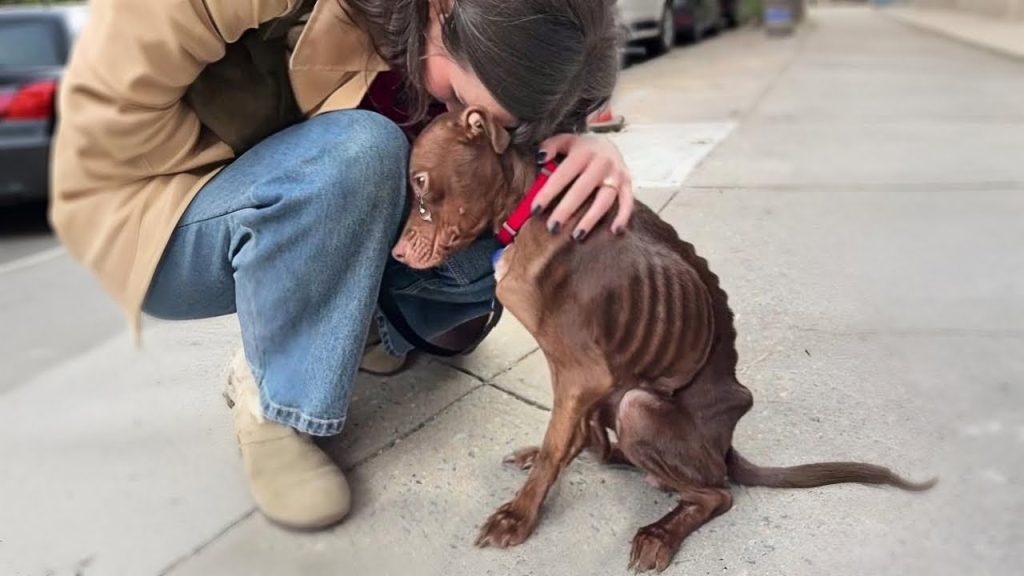
When she arrived at her foster home, the first priority was stability. Her foster mom immediately placed her on a carefully monitored refeeding plan designed to nourish her slowly and safely. Years of experience have taught rescuers that when a dog is this malnourished, patience can be lifesaving. Too much food too quickly can cause serious complications, so every meal was measured, every change documented. Alongside proper nutrition, Whimsy began medical treatment for anemia and kennel cough. Her body was weak, but she responded gently to care, as if she understood she was finally safe.
What surprised everyone most was her personality. Despite the evidence of a painful past, Whimsy revealed a sweetness that felt almost shy. She moved cautiously at first, lowering her gaze as if unsure whether she was allowed to take up space. Yet when spoken to softly, her tail would give a tentative wag. She leaned into gentle touches, accepting affection with a bashful expression that melted hearts. It was clear she wanted connection; she simply needed reassurance that it would last.
She quickly formed a bond with her foster brother, Simon. Simon, steady and kind, seemed to sense exactly what she needed. He gave her space when she hesitated and offered companionship when she was ready. Watching them together was like witnessing a quiet conversation unfold without words. Whimsy followed his lead around the house, learning the rhythm of daily life. With Simon nearby, her steps grew more confident.
Comfort became an essential part of her healing. Warm sweaters helped her conserve body heat as she regained weight, and soft blankets offered a safe place to rest. There is something profoundly healing about warmth for a dog who has known discomfort. Wrapped in layers of gentle care, Whimsy began to sleep more peacefully. Her breathing, once shallow and strained, settled into a calmer rhythm. Rest allowed her body to focus on rebuilding strength.
But physical recovery was only part of the journey. Her foster mom understood that true healing requires attention to emotional well-being as well. A structured routine was introduced to build confidence and reduce anxiety. Dogs thrive on predictability, especially those who have experienced instability. Mealtimes, walks, rest, and play were thoughtfully scheduled, creating a sense of security that Whimsy could rely on.
Backyard enrichment became a daily ritual. Simple activities—exploring new scents, navigating gentle obstacles, engaging with safe toys—helped stimulate her mind. Each small success strengthened her sense of capability. She learned that curiosity could lead to positive experiences rather than fear. Over time, her posture changed. Instead of crouching low to the ground, she began to stand a little taller.
Interactive tug-of-war games became another meaningful tool. These sessions were not about competition but about connection. Tug encouraged eye contact, playfulness, and trust. It reinforced the bond between Whimsy and her foster mom in a way that words never could. With every gentle pull and shared moment of laughter, Whimsy discovered that joy was still possible.
Scent-based muzzle training was also introduced, approached with patience and encouragement. For anxious dogs, unfamiliar equipment can feel threatening. By associating the muzzle with positive reinforcement and rewarding scents, her foster mom transformed what could have been stressful into something manageable. This careful training helped reduce anxiety and prepared Whimsy for future outings where safety might require it. The process emphasized respect for her comfort and boundaries.
As days passed, the changes became visible. Her appetite strengthened. Her energy gradually returned. By the end of her second week in foster care, she weighed 21 pounds—a remarkable gain that reflected consistent care and attentive monitoring. The sharp outlines of her hip bones softened. Her coat, once dull, began to shine with renewed health. Even her eyes looked brighter, reflecting not just improved nutrition but growing trust.
Recovery, however, is never a straight line. There were moments of hesitation, days when fatigue lingered, and times when old fears resurfaced. Healing from neglect or hardship does not happen overnight. Yet each setback was met with patience. There was no pressure, only steady support. That consistency became the foundation upon which Whimsy rebuilt her sense of safety.
Perhaps the most powerful transformation was not measured on a scale. It was seen in the way she sought affection without flinching, in the confident way she approached Simon to initiate play, in the gentle wag of her tail when her foster mom entered the room. Trust had taken root where uncertainty once lived.
Whimsy’s story is a reminder that even the most fragile beginnings can lead to profound renewal. Love, when paired with structure and thoughtful care, becomes a powerful force for change. Her scars may never fully disappear, but they no longer define her. Instead, they tell a story of survival—and of what can happen when compassion meets commitment.
Healing takes time. It asks for patience, understanding, and unwavering kindness. In Whimsy’s journey, we see that broken spirits are not beyond repair. With steady hands and open hearts, even a dog who once weighed only 15 pounds and carried the weight of her past can learn to trust again.