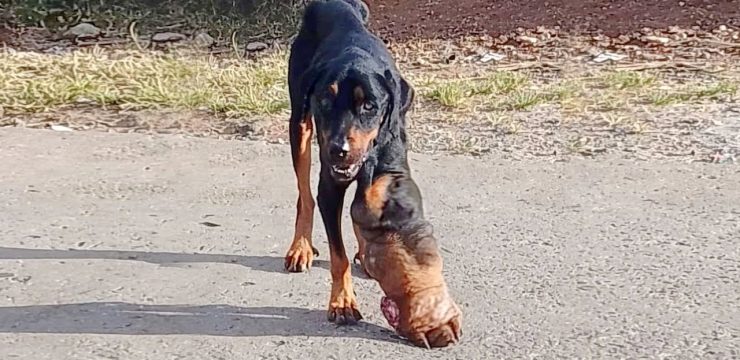
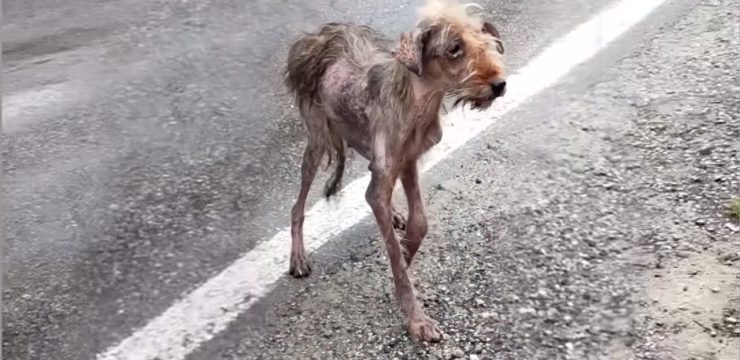
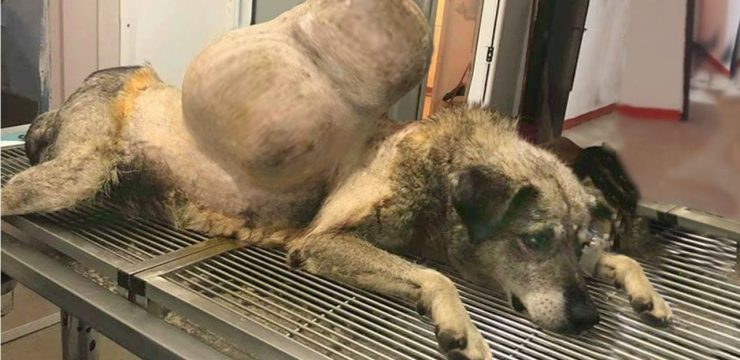
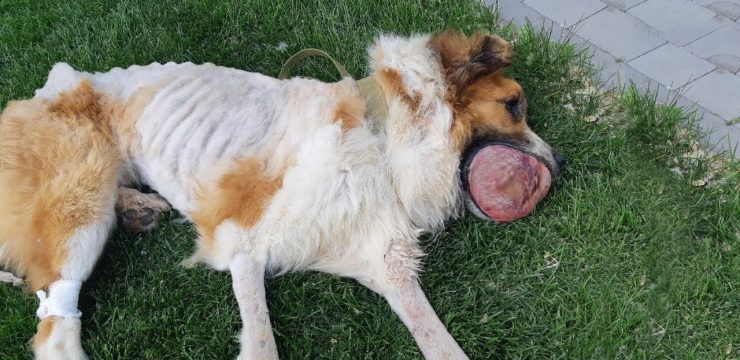
Haeng-un’s life was defined by loyalty, but it was a loyalty that went unseen and unreturned for far too long. For fourteen years, he stood guard at a factory, chained in place, exposed to the elements, and forgotten by the very people he served. Day after day, season after season, he remained where he was left, offering silent devotion without ever receiving the care or comfort every living being deserves. Over time, that long stretch of neglect began to take its toll in ways no one could ignore once they finally saw him.
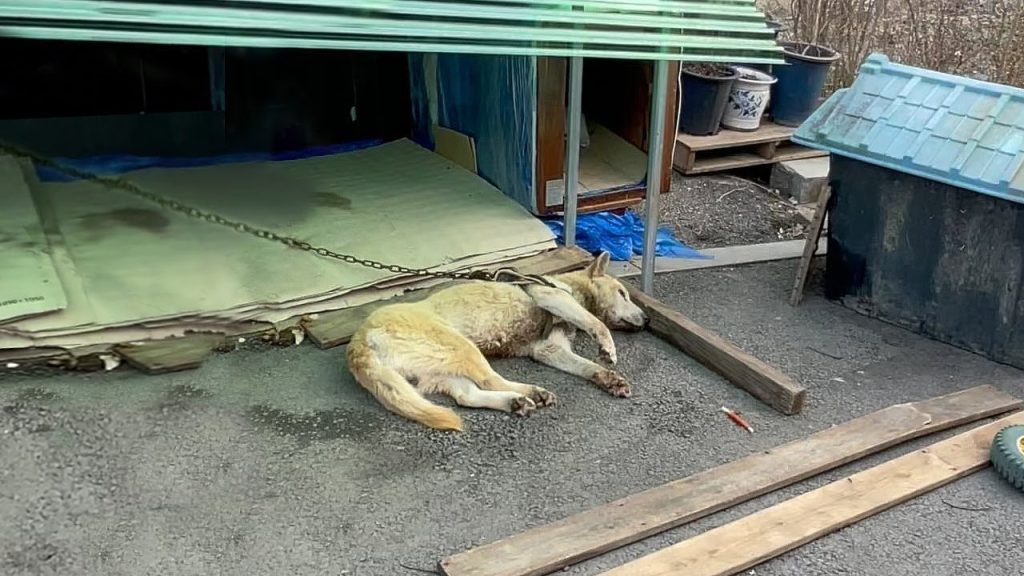
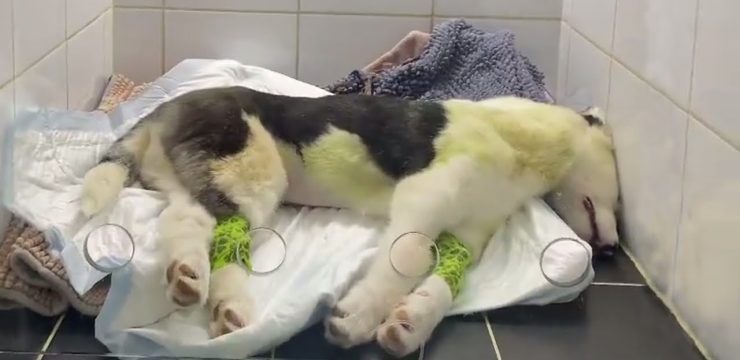
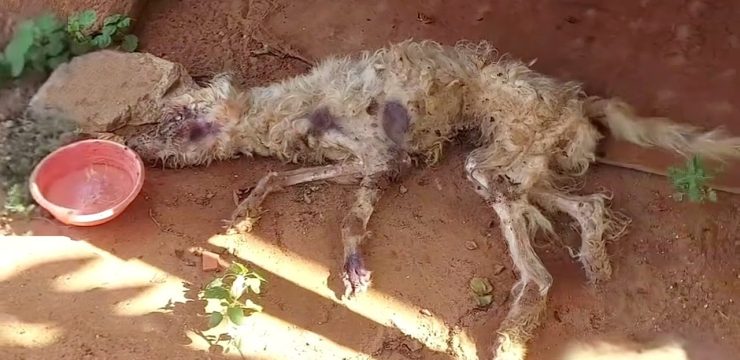
By the time rescuers arrived, Haeng-un was no longer able to stand. His body had weakened to the point where even lifting his head seemed impossible. He lay motionless, his breathing shallow and labored, as if each breath required more strength than he had left to give. It was a heartbreaking sight, not just because of his physical condition, but because of the quiet endurance written into his eyes. This was a dog who had given everything he had, and yet had been left with nothing in return.
He was rushed to a veterinary clinic, where the full extent of his condition began to unfold. The diagnosis revealed a combination of serious health issues that had developed over years without proper care. He was suffering from heartworms, a condition that slowly damages the heart and lungs. His liver showed signs of hepatitis, and his bloodwork indicated severe anemia caused by a heavy parasite infestation. Each diagnosis alone would have been concerning, but together they painted a picture of a body pushed far beyond its limits.
Perhaps most devastating was the condition of his spine. Years of confinement and lack of movement had led to significant damage in his lower back, leaving him paralyzed. This explained why he could no longer stand or even adjust his position. For a dog who had once been alert and active, the loss of mobility was more than a physical setback. It was a loss of independence, of dignity, and of the simple joys that make life worth living.
Despite the overwhelming nature of his condition, something remarkable began to emerge in the days that followed. Haeng-un showed a quiet but undeniable will to keep going. It started with something small, something easy to overlook if you weren’t paying close attention. He began to eat. Accepting food may seem like a simple act, but in moments like these, it becomes a powerful sign of life, a signal that somewhere deep inside, the desire to survive is still there.
With consistent medical care and gentle attention, small changes began to appear. His eyes, once dull and distant, started to regain a soft brightness. His skin, which had been irritated and fragile, slowly began to heal. Each improvement was modest on its own, but together they formed a steady path forward. Progress did not happen overnight, and there were undoubtedly difficult moments along the way, but he continued to respond, step by step, to the care he was finally receiving.
What made his journey especially moving was not just the medical treatment, but the compassion that surrounded him. For the first time in his life, Haeng-un was not just surviving. He was being cared for, spoken to, and treated as a life that mattered. That emotional connection, though invisible in medical charts, played a profound role in his recovery. It gave him something he had never truly known before: a sense of safety.
Rehabilitation became the next crucial phase of his journey. Strength had to be rebuilt slowly, carefully, and with patience. His body had spent years in decline, and asking it to move again required both time and persistence. There were moments of uncertainty, moments when progress seemed fragile, but those around him remained committed. They believed in the possibility of change, even when the odds were unclear.
Then came a moment that no one who witnessed it would ever forget. After so long without movement, Haeng-un began to stand. At first, it was unsteady, almost hesitant, as if his body needed to remember what it once knew. But he did it. He found his balance, however briefly, and in that moment, everything changed. It was not just a physical milestone, but an emotional one, a reminder that even after years of hardship, recovery is possible.
His first steps followed, slow and careful, but filled with meaning. Each movement carried the weight of his past and the promise of something new. It was a powerful image, one that spoke to resilience in its purest form. A dog who had once been left to fade away was now finding his way back, guided by care, patience, and an unwavering belief that his life still held value.
Haeng-un’s story is not just about suffering, though it began that way. It is about endurance, about the quiet strength that can exist even in the most difficult circumstances. It is also about the impact of compassion, and how a single act of kindness can alter the course of a life that seemed beyond saving.
After fourteen years of being overlooked, he was finally seen. And in being seen, he was given something extraordinary: a second chance. His journey reminds us that it is never too late for change, never too late for healing, and never too late for a life to begin again.