There is a particular kind of quiet that settles over a room when everyone realizes, at the same moment, that they are looking at a life hanging by a thread. That quiet filled a small veterinary clinic on the day a hunting dog named Hemingway arrived.
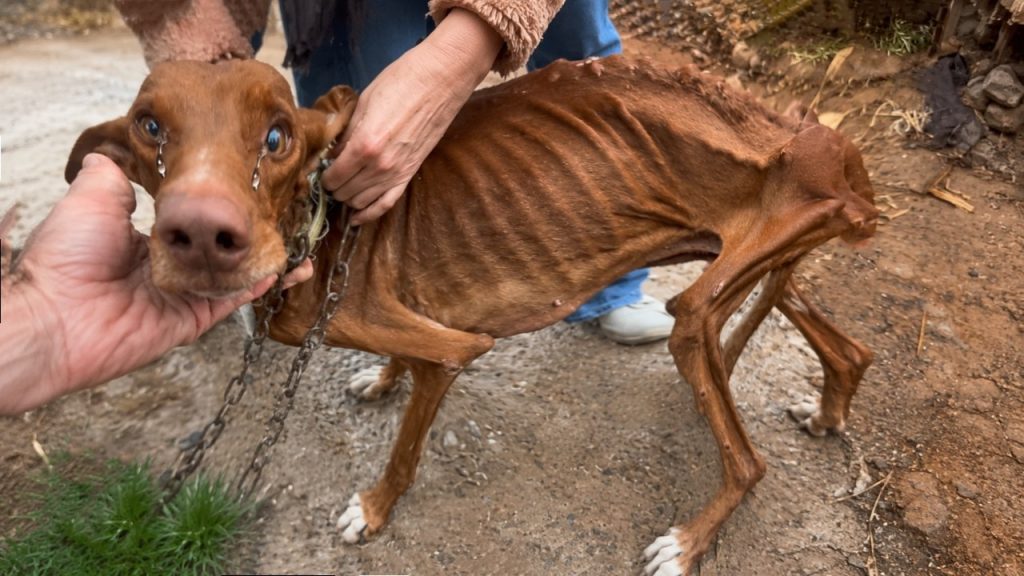
His rescuers called him Heming for short. He was only four years old, an age when most dogs are full of energy, chasing scents across open fields and bounding toward anyone who calls their name. But Heming had been forgotten. Somewhere along the way, the people who should have cared for him had stopped seeing him at all.
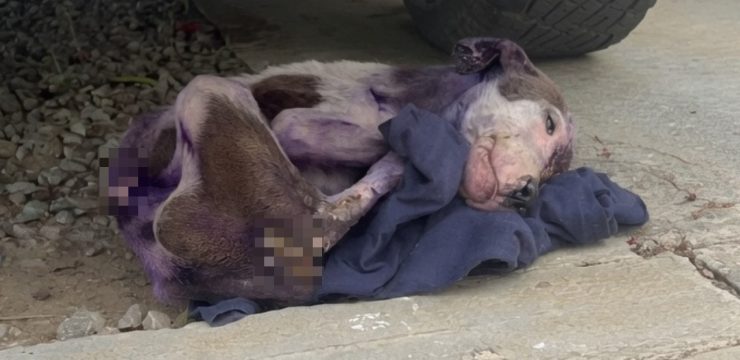
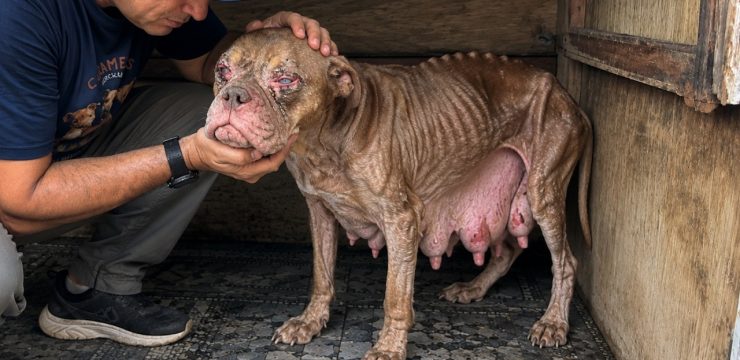
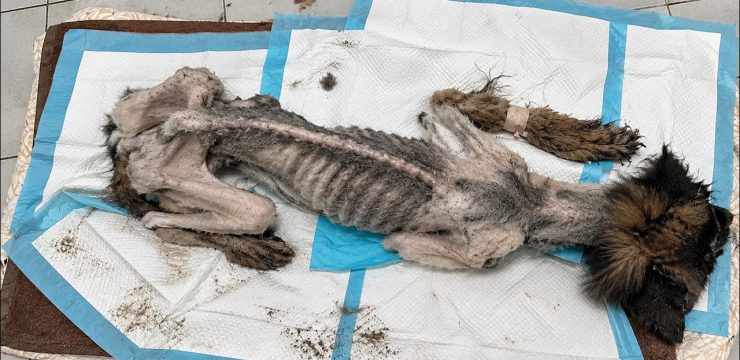
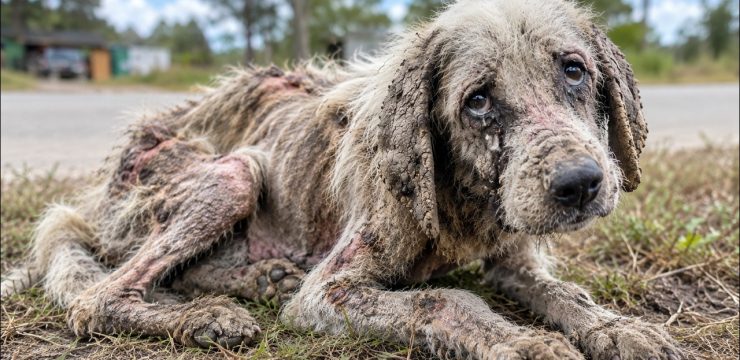
When he was first found, he was dangerously thin. His ribs, his hip bones, and the curve of his spine showed plainly beneath his coat. Old scars marked his body, quiet reminders of a hard life no dog should ever have to live. Part of one ear was missing. He was weak, worn down, and had clearly gone a very long time without enough food or water.
For the staff at the clinic, it was a heartbreaking sight. These were people who had seen difficult cases before, people trained to stay calm and focused. Yet when they looked at Heming, many of them struggled to hold back tears. He was severely starved and badly dehydrated, and it was clear he had come closer to the end than anyone wanted to admit.
It would have been easy to imagine that a dog in his condition had given up. After everything he had been through, who could blame him for being afraid, for turning away, for no longer trusting the hands reaching toward him?
But Heming did something no one expected.
He wagged his tail.
It was not a big, joyful wag. He did not have the strength for that. It was soft and gentle, barely more than a slow sway. But it said everything. In spite of the hunger, the neglect, and the hardship he had endured, this sweet dog still had love to give. He had not given up on people. Somehow, deep inside that fragile body, his heart was still open.
For many who heard his story, that small wag became the moment they would never forget. It carries a lesson so many of us learn later in life: kindness and forgiveness are not signs of weakness. Sometimes they are the bravest things a living soul can offer.
Saving Heming would take time, patience, and great care. A body that has gone without food for so long cannot simply be filled up all at once. The veterinary team knew that rushing his recovery could do more harm than good. So they started slowly.
He received careful medical attention and was given small meals at regular intervals, day after day. Each feeding was a gentle step forward. Each bowl was a quiet promise that he would not be left hungry again.
And little by little, Heming began to respond.
Over the following weeks, the change in him was remarkable. He gained around seven kilos, roughly fifteen pounds, a huge difference for a dog who had arrived so painfully thin. His muscles began to rebuild. His coat looked healthier. His eyes, once dull and tired, started to brighten.
But perhaps the most beautiful transformation was not in his body. It was in his spirit.
As his strength returned, Heming’s true personality began to bloom. The people caring for him discovered a gentle, playful dog with a tender nature. He loved going for walks. He loved attention and affection. He leaned into every kind touch as if he were making up for all the time he had gone without it.
The dog who had once been forgotten was now impossible to ignore.
Then his story took a turn no one could have planned.
A volunteer named Pieter traveled from the United Kingdom to help at the shelter. Like everyone else, he was drawn to Heming. The two began taking long walks together, side by side, mile after mile. During those quiet hours, something special grew between them.
It is hard to explain the kind of bond that forms between a person and a dog who has known suffering. It is built on trust, earned slowly and offered completely. Heming, who had every reason to be wary, chose to trust Pieter. And Pieter, walking beside this gentle, resilient dog, found that his heart had already made its decision.
He officially adopted Hemingway.
After surviving starvation and neglect, after coming so close to being lost forever, Heming finally received the happy ending he had always deserved. He now has a forever home, a family of his own, and a person who will make sure he never goes hungry or feels abandoned again.
There is something deeply moving about a story like this, especially for those of us who have lived long enough to know how much a second chance can mean. Heming’s life reminds us that it is never too late for healing. Patience can rebuild what hardship breaks down. And love, when it finally arrives, can change everything.
So the next time you see an animal in need, remember Hemingway. Remember the soft wag of his tail on the day he had almost nothing left. He never stopped believing in people.
And thanks to those who refused to give up on him, people finally proved him right.