It was supposed to be an ordinary day for an animal rescue team in Poland. They were already en route to another case when something caught their attention along the snowy roadside. A tiny figure stood frozen in place. They stopped immediately. What they feared quickly turned into heartbreaking reality—a small dog, chained outside, utterly alone in the bitter cold.
They couldn’t look away. The moment they saw his frail body trembling, they rushed over. He didn’t bark. He didn’t cry. But his eyes told the entire story. His thin frame shook violently from the cold. Curled in on himself, barely upright, he seemed to have given up. Snow clung to his fur. He was too weak to run, too defeated to resist. All he could do was lift his eyes, silently pleading—for warmth, for food, or maybe just a kind hand.
One of the women from the team scooped him up gently. Her face was tight with emotion—not just anger, but urgency. Her arms wrapped around the fragile body, holding him against her chest. Her coat served as a shield against the wind, her hands working carefully to bring warmth back to his frozen limbs.
Then, the homeowner appeared. His expression was more irritated than concerned. When asked why the dog had been left outside, he casually shrugged. “He’s used to it,” he said.
Those four words struck deeper than any frostbite ever could. “He’s used to it.” As though that made it acceptable. As though any living creature should be expected to endure hunger, isolation, and freezing temperatures without question. The rescuers didn’t argue—there was no point. The dog needed action, not discussion.
And then came the moment that stunned the team.
“Take him,” the man said. “Just leave the chain.”
Leave the chain.
As if the chain—a cold, rusted symbol of neglect—held any real value. The rescuers glanced at one another. No more words were spoken. The dog was lifted gently into their arms, and the chain was left behind, discarded like the past it represented.
But the heartache wasn’t over yet.
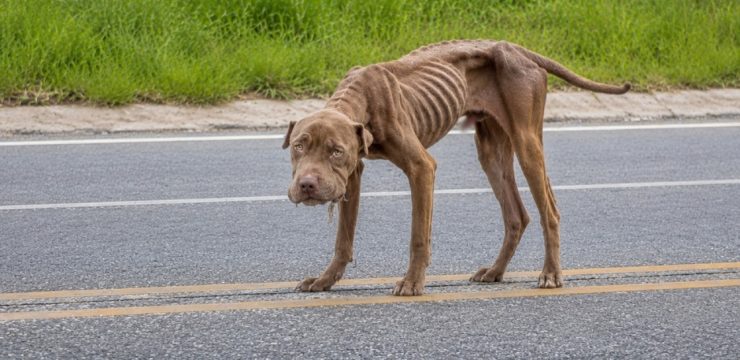
Just beyond the house, around the side, they found another dog. This one was older, larger—and in even worse condition. He was also chained outside, inside a small, dilapidated wooden shelter barely large enough for him to turn around. No insulation. No bedding. No sign of food. Just hunger. Just cold. Just silence.
His ribs jutted sharply through his skin. Each bone was a quiet cry for help. His breathing was shallow. When the rescuers approached, he didn’t react with fear. He simply looked up. His eyes met theirs, full of silent desperation, asking only one thing—“Are you here for me too?”
Without hesitation, they opened the van.
And in one quiet, unforgettable moment, the dog stepped forward and leapt into the woman’s arms. His body quivered—not just from the cold, but from something deeper. A longing. A hope. He clung to her like he’d been waiting his whole life for someone to come.
This time, no words were exchanged. No protest. No excuses. The owners gave him up like someone discards old furniture. No emotion. No farewell.
Both dogs were rushed to a nearby vet clinic. Their condition was serious—severe malnutrition, early signs of frostbite—but they were expected to recover. The veterinary team wrapped them in warm blankets and offered bowls of nourishing food, placed gently before them.
The dogs didn’t wag their tails just yet. But their eyes began to change. What had once been clouded with fear and resignation now held a flicker of something else. Something tender. Something like hope.
Elsewhere in the same region, another rescue team was working tirelessly. That same day, they saved three more dogs and one cat—all abandoned, all cold, all in distress. By nightfall, seven animals had been pulled from suffering.
The rescue group later shared this story—not for applause or attention, but as a reminder. A reminder of the quiet, unseen suffering that so many animals endure every single day. Critics often say, “You can’t save them all,” or, “It’s not enough.” But the team knows the truth. They keep going. Because for every single animal rescued, it changes everything. It means warmth. It means safety. It means life.
Every rescue mission ends with mixed emotions. Relief for the ones they saved. Sorrow for the ones they couldn’t reach in time. But they carry on, knowing that saving just one makes a difference.
And in this story, it ends not with drama, but with peace.
The camera lingers on the small white dog, now safe, curled up in a soft blanket. His eyes—once wide with terror—are calm. He blinks slowly, his body finally relaxed. There is no panic in his gaze anymore. Instead, there’s something else. Gratitude. Quiet, unmistakable gratitude.
There’s a message here. Not loud. Not shouted. But powerful.
You don’t have to be part of a rescue team to make a difference. You just have to notice. You just have to care.
Sometimes, a single act of kindness—a blanket, a meal, a warm place to rest—is all it takes to save a life.
And sometimes, rescuing one little dog from the snow makes the entire world feel a little less cold.