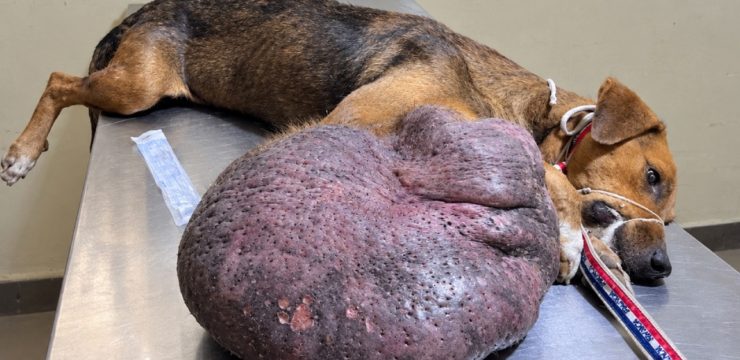
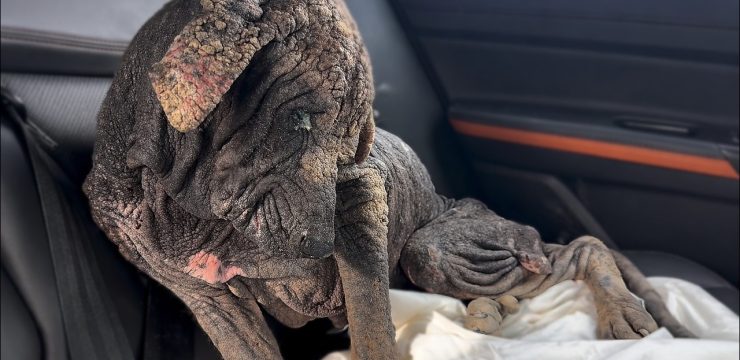
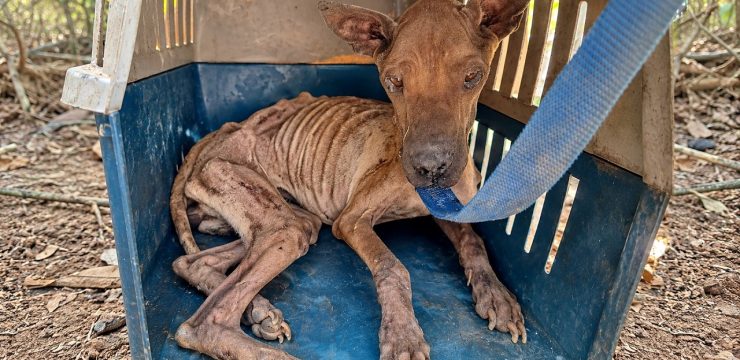
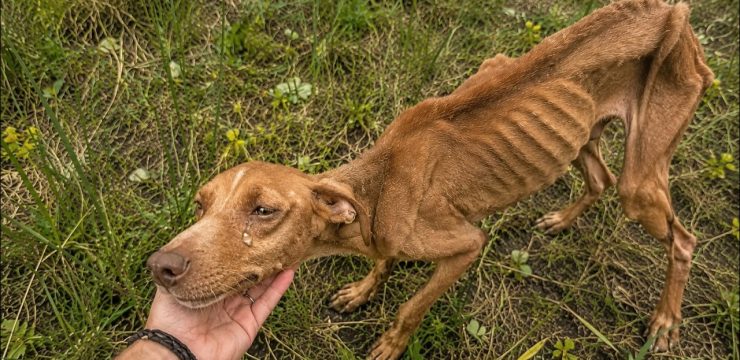
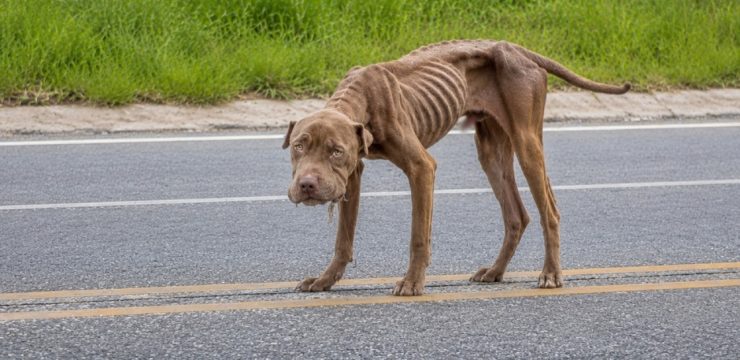
Marsik, also lovingly known as Bars, was once promised a life of warmth, kindness, and safety. Instead, he found himself in a world that gave him none of those things. His story begins not with joy or innocence, but with pain—deep, senseless pain inflicted by the very hands that should have protected him. When he was finally rescued, he was unrecognizable—not just physically, but emotionally. His eyes held no light, his spirit no spark. What remained was the shell of a dog who had once hoped for love, now broken and drenched in the aftermath of cruelty.
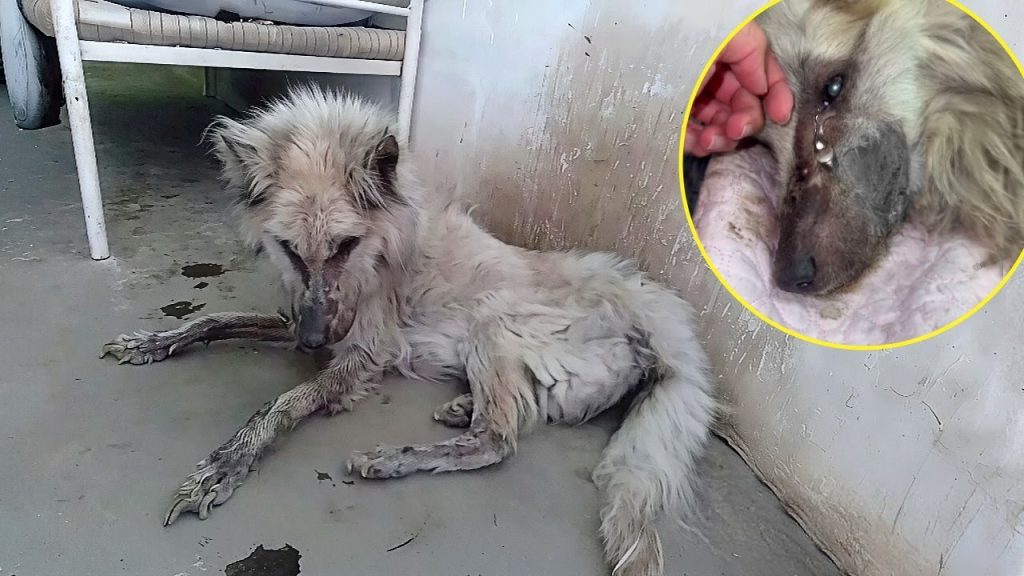
When he arrived at the shelter, Marsik was barely holding on. His body was soaked, his fur matted and caked with layers of filth. His frail frame spoke louder than words. He didn’t bark. He didn’t move. He simply collapsed, too weak to stand, too weary to care. The caregivers who met him that day knew right away—this wasn’t going to be a quick fix. It would take time, patience, and a kind of love that sees beyond wounds and fear.
The first step was cleansing. But it wasn’t just about washing away dirt—it was about removing the remnants of a life that had nearly destroyed him. Beneath the grime, his body revealed deep, painful wounds—some visible, others etched in memory. Cleaning these gashes was a delicate, often heartbreaking process. Each time, the medical team worked not only with hands, but with hearts. They whispered softly, moved slowly, and gave him reasons—however small—to trust again.
Feeding Marsik posed its own set of challenges. His body had gone so long without proper nourishment that even the act of swallowing had become a struggle. He gagged, trembled, and often gave up halfway through his meals. But the caregivers didn’t give up. They adjusted his food, encouraged him with gentle touches, and waited. Every bite he managed to take felt like a victory—not just for Marsik, but for the people rooting for him.
It was around this time that something remarkable began to happen. Marsik, the dog who once lay motionless and mute, started to make sounds. Small, uncertain at first—but gradually more expressive. He would let out soft whimpers or vocalizations whenever someone passed by, as if asking, “Will you see me? Will you stay?” It wasn’t a cry of pain—it was a call for connection, the beginning of his emotional return.
Then came the day he tried to stand.
Wobbly and weak, he pushed against the floor with trembling legs. His first few attempts ended in collapse, but the determination in his eyes was undeniable. Eventually, he managed to stay up for a few seconds. Then longer. Then, with help, he began to walk—small steps at first, then bigger ones. His movements were clumsy, but each one told a powerful story: I am still here. I am still trying.
As his wounds healed, new tissue began to grow. His fur regained some of its softness. But more importantly, his spirit began to bloom. He started lifting his head. He made eye contact. And sometimes, when the sun hit his face just right, you could see a flicker of pride, as if he was finally starting to recognize his own reflection—not just as a survivor, but as someone worthy of care.
His caregivers marveled at the transformation. Marsik had gone from being a “lost cause” to a living example of what compassion can do. He wasn’t just recovering—he was rebuilding. Each day, he learned a little more about how to live again: how to receive affection, how to give it back, how to play, how to rest without fear. Even the smallest moments—like a tail wag or a curious glance—became milestones.
But perhaps the most beautiful part of his recovery is this: he never stopped believing in people. Despite everything he endured, Marsik didn’t grow bitter. He didn’t retreat into himself forever. Instead, he chose—consciously or not—to embrace every second of kindness offered to him. That is not weakness. That is strength in its purest form.
In a world where it’s easy to overlook the broken, Marsik teaches us that healing is always possible. He reminds us that love isn’t just a feeling—it’s an action, a choice we make every day. It’s the warm hand that reaches out, the soft voice that stays calm, the quiet presence that says, “I see you. I’m here.”
Marsik’s story is not just about rescue. It’s about redemption. It’s about the long, quiet road between suffering and recovery—a road filled with patience, setbacks, and slow victories. It’s about the humans who refused to give up, and the dog who responded not with fear, but with hope.
As he continues his journey, Marsik has become a symbol—for all animals who have been forgotten, and for all people who still believe in second chances. His head no longer hangs low. His tail wags with confidence. And when he looks at the world now, he doesn’t see pain. He sees promise.
Marsik is proof that even the most damaged lives can be gently pieced back together with care. He may bear the scars of his past, but they no longer define him. Today, they serve as reminders of how far he has come—and how far he is still meant to go.
In every sense of the word, Marsik is healing. Not just his body, but his soul. And for those who have followed his journey, he has healed something in us too—a quiet belief that love can still win. Always.