She was just a stray—fragile, frightened, and rejected by the world. Her eyes, milky and clouded from severe blindness, made her look “scary” to passersby. Instead of compassion, she was met with ridicule. Children shouted and ran from her. Adults turned their heads, chased her away, or simply ignored her suffering. Alone on the streets, she learned to hide from both people and pain, retreating into the shadows with a body aching from a painful skin condition and a heart heavy with loneliness.
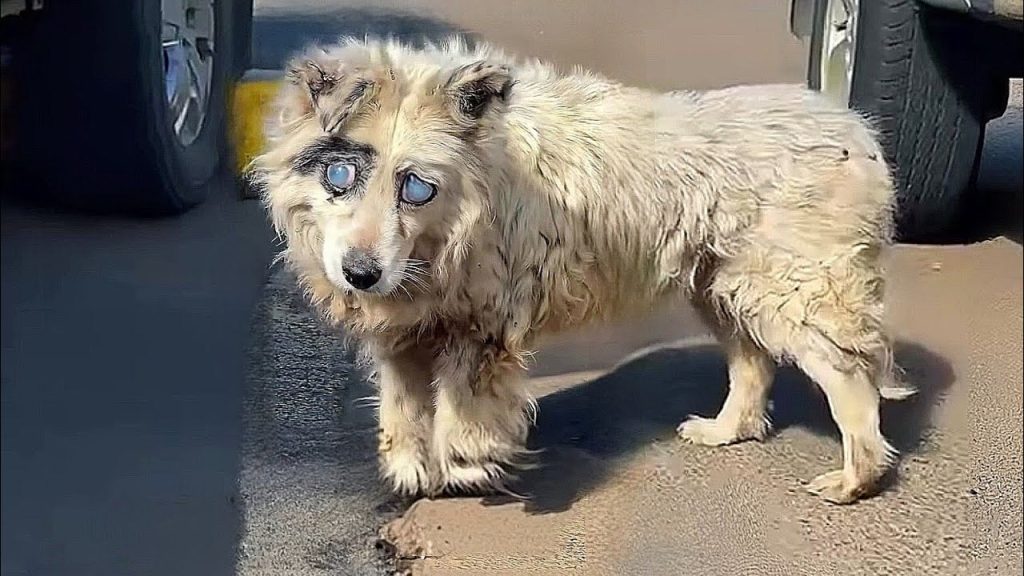
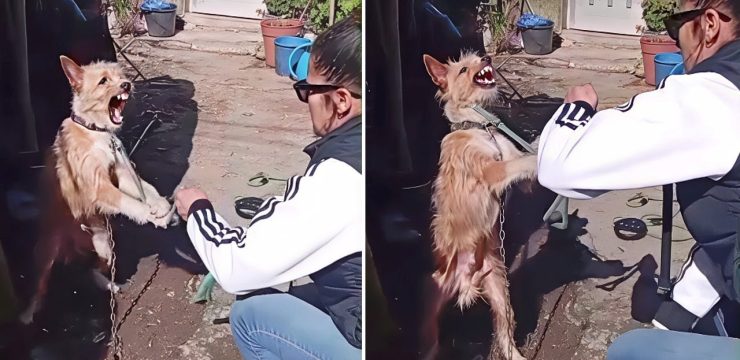
When rescuers first spotted her, they were stunned by her condition. Her skin was raw, cracked, and inflamed from untreated mange. Her fur had thinned so drastically it barely covered her frail frame. The look in her face was not one of aggression—but of fear. Fear of more rejection. Fear of being hurt again. Fear of hoping that maybe this time someone might actually care.
Approaching her required patience. She flinched at every movement, every sound. Gently, they wrapped her in a warm blanket, whispering softly, offering kindness she hadn’t felt in so long. The road ahead would be hard—she didn’t just need medicine. She needed time, space, and above all, love.
At the shelter, she was given a safe place to rest for the first time in what must have been years. Her body, frail and shaking, slowly adjusted to the idea of comfort. The team didn’t rush anything. They gave her soothing medicated baths to relieve the itch and pain. They treated her skin infections with expert care and watched over her as she slept, curled tightly into herself, unsure if she could let go of the fear that had kept her alive on the streets.
Days passed. Then weeks. Something beautiful began to unfold.
Her fur—soft and golden—began to return, a little at a time. The raw patches of skin softened. But even more miraculous was the transformation inside her. Slowly, her spirit began to lift. She started to recognize the gentle hands that fed her, the kind voices that greeted her every morning. She stopped flinching at every sound. Instead of curling up in the corner, she began walking around the room, carefully navigating her new world despite her blindness. She was still in darkness, but for the first time in a long time, she wasn’t alone in it.
She began to trust. Tentatively at first—a small tail wag, a moment of stillness as someone stroked her back. Then came affection: resting her head on a caretaker’s lap, gently nudging a hand for more pets, curling up beside other dogs during nap time. Her blindness no longer defined her. She had discovered a deeper vision—one that saw kindness, love, and safety. She felt it in every hug, every warm meal, every gentle word.
Her journey is a powerful reminder: beauty is not just what we see. It’s how a creature can suffer so deeply, and yet still choose to love again. It’s in the resilience of an animal who has every reason to give up, yet fights with every heartbeat for a better life. Her past was filled with abandonment, but her present was a testimony to what healing can look like when love becomes the medicine.
For many, it might be easy to overlook a dog like her. Too damaged, too different, too much trouble. But those who took the time to see past her appearance were rewarded with something far more profound—a gentle soul, full of gratitude, full of life, waiting to blossom.
Not every dog will have a second chance. But this one did. And she took it with grace.
Blindness never defined her worth. Nor did her ragged fur, or her trembling body. What defined her was her heart—the one that kept beating through the cruelty, through the cold, through the silence. And now, that heart beats stronger than ever, wrapped in warmth, surrounded by people who see her not for what she lacks, but for all that she is.
In a world that often turns away from the broken, she stands as a quiet testament to the power of kindness. She’s not a tragic case. She’s a victory. A soft, warm reminder that healing is possible. That love—true, patient love—can reach even the deepest wounds.
We live in a world full of noise and distraction. But stories like hers ask us to pause. To look closer. To care deeper. Because behind every “scary” face might be a soul longing to be seen. Behind every trembling step, a journey worth witnessing. And behind every forgotten animal, a second chance waiting to be given.
She may never see again. But now, she is seen.
And being seen—truly seen—is sometimes the greatest gift of all.