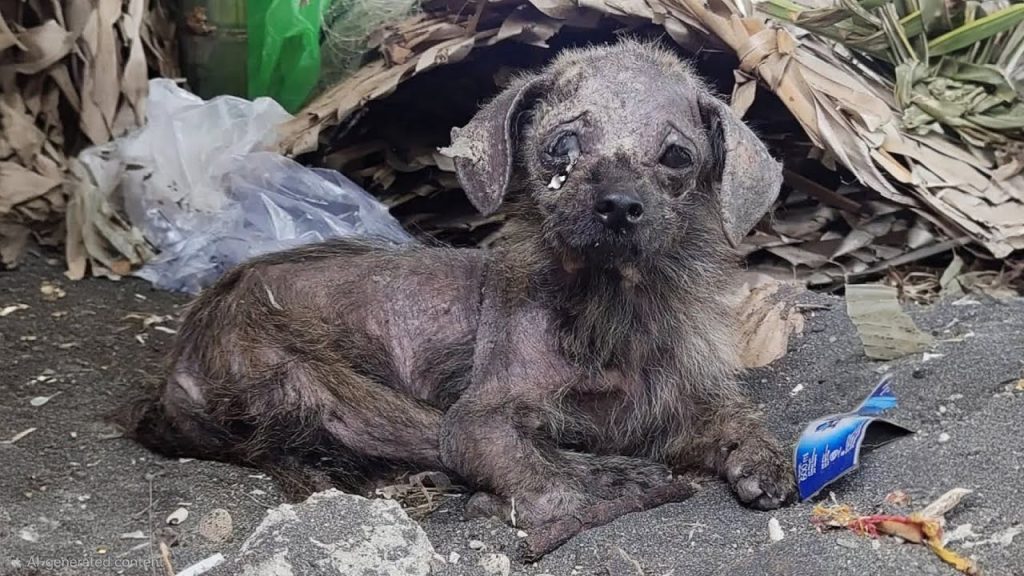
Christine was found wandering the streets of Bali, a tiny, trembling soul weighing barely four pounds. Later given the affectionate nickname “Stiffles,” she had clearly known hardship long before anyone stopped to help her. Her fragile body told a story of neglect. Her ribs pressed sharply beneath thinning fur. Her skin was inflamed from untreated disease. One of her legs bore the painful reminder of a surgery that had failed her, leaving behind a permanent deformity that altered the way she walked.
Rescuers in Bali have seen this pattern far too often. Certain breeds become trendy, photographed and admired for their fashionable appearance. Families rush to purchase them, drawn by status or aesthetics rather than commitment. But when medical issues arise, when treatment requires patience and financial responsibility, some of these once-cherished pets are quietly abandoned. Christine was likely one of those casualties of impulse and indifference.
When she was first approached, fear overwhelmed her. Her body froze, unsure whether another human hand meant harm or safety. She weighed only two kilograms—far below what a healthy dog of her size should be. Malnourishment had weakened her muscles, and her skin condition caused constant discomfort. She was missing several teeth, a sign that her early care had been inconsistent at best. Every step she took revealed the imbalance caused by the unsuccessful operation on her leg.
Yet even in that broken state, something remarkable remained untouched. Her spirit had not surrendered.
Those who met her quickly noticed what rescuers lovingly described as her “helicopter tail.” The moment she sensed kindness, her tail began spinning in wide, enthusiastic circles, as though powered by a motor of pure hope. It was impossible to watch without feeling a swell of emotion. That small, unstoppable wag seemed to declare that despite pain and abandonment, she still believed in connection.
Medical care began immediately. Gentle hands bathed her in medicated solutions to soothe her irritated skin and remove layers of grime. Antibiotics were administered daily to fight infection. Nutritious food was introduced slowly and carefully so her weakened body could begin rebuilding strength without shock. The team monitored her closely, ensuring that each small gain was steady and safe.
Initially, Christine rested inside a veterinary clinic cage, a necessary but temporary stop on her journey. Even there, her personality began to emerge. She would tilt her head curiously at every sound and greet caregivers with that whirring tail. It was clear she did not want to be defined by her limitations. She wanted to live.
Recognizing that emotional healing is as vital as physical recovery, her rescuers soon transferred her to a foster home. The difference was profound. In a warm, quiet environment, surrounded by soft bedding and consistent affection, Christine relaxed in ways she never had before. Foster care allowed her to move freely, to practice walking at her own pace, and to experience the rhythms of a stable household.
Her appetite improved. The dullness in her eyes brightened. Though her leg would never be perfectly straight and her missing teeth would remain part of her story, she carried herself with increasing confidence. Each day, she seemed to understand more deeply that she was safe.
What makes Christine’s story resonate so strongly, particularly for those who have loved animals across decades, is the reminder that worth is not measured by perfection. Many readers in their later years understand this truth intimately. Life leaves marks—on bodies, on hearts, on memories. But those marks do not diminish value. If anything, they deepen it.
Christine’s journey challenges the idea that animals are disposable accessories. A pet is not a fashion statement. It is a living being whose loyalty and trust are profound gifts. When people purchase animals solely for appearance, without preparing for the responsibilities that may follow, the consequences can be heartbreaking. Responsible adoption means understanding that illness, aging, and unexpected costs are part of the commitment.
Thankfully, Christine encountered people who believed in second chances. With structured medical care, consistent nutrition, and patient rehabilitation, her health steadily improved. The once-skeletal frame filled out with healthy weight. Her skin healed under careful treatment. She began to play in short bursts, testing her strength with cautious enthusiasm.
And always, that tail spun like a tiny propeller.
Her quirks became endearing signatures of her personality. She would scoot forward eagerly when she recognized a familiar voice. She would lean gently against her caregivers, as if confirming that they were real and would not disappear. Even with her physical imperfections, perhaps because of them, she radiated a resilience that inspired everyone around her.
Today, Christine stands as a testament to what compassion can accomplish. She may never move exactly like other dogs. She may always carry visible reminders of her past. But she is healthier, happier, and filled with anticipation for a permanent home that will cherish her exactly as she is.
For potential adopters, her story offers a powerful lesson. Sometimes the dogs who appear imperfect on the outside possess the deepest wells of gratitude and loyalty. They understand loss, and they recognize love when it is given. They form bonds that are profound and enduring.
Christine is ready for that kind of bond. Not because she has become flawless, but because she has always been worthy.
Her journey from abandonment to healing underscores a simple, enduring truth: compassion does not require perfection. It requires presence, patience, and the willingness to see value where others may have looked away. For those who believe that every life deserves dignity, Christine’s story is both a caution and an invitation—to choose responsibility over trend, and love over convenience.