High in the remote mountains of Tibet, where icy winds sweep across vast stretches of rock and snow, a 12-month-old snow leopard cub lay helpless against the frozen earth. Known as the “Ghost of the Mountains” for its elusive beauty, this young cub had been practicing the very skills it would need to survive—stalking, climbing, learning to hunt—when a devastating fall changed everything. The misstep left the fragile predator unable to stand, unable to flee, and unable to care for itself in one of the harshest climates on Earth.
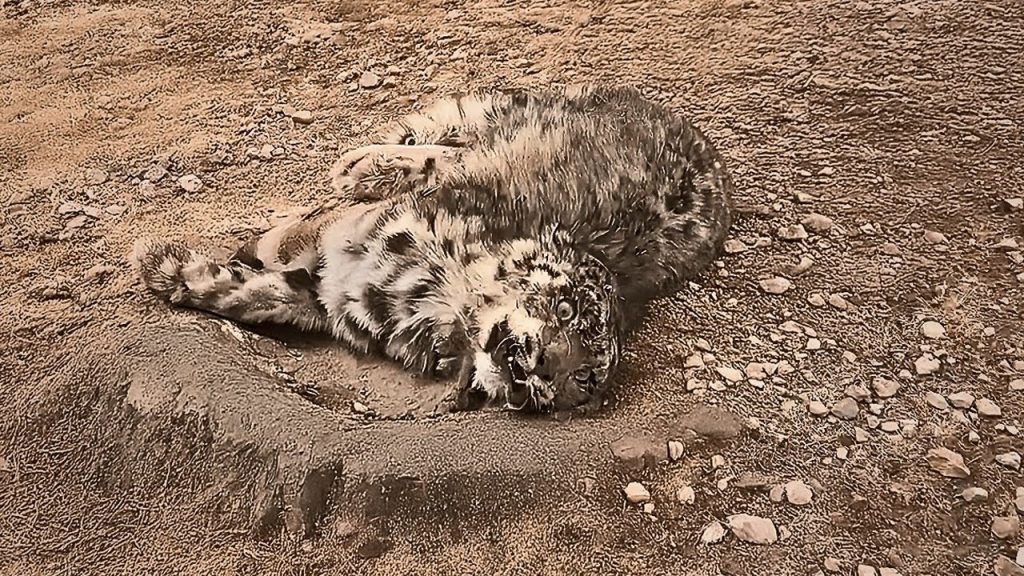
For days, the cub remained stranded in sub-zero temperatures that plunged to eleven degrees below zero Celsius. Without shelter, without food, and without its mother, it endured bitter winds and relentless cold. Starvation set in quickly. Severe exhaustion followed. Its small body, built for strength and stealth, grew weak and motionless against the unforgiving terrain. By the time a local herder happened upon the cub, the animal was paralyzed and barely clinging to life.
The herder recognized that this was no ordinary sighting. Snow leopards are rarely seen, and even more rarely approached. Yet compassion outweighed fear. Word was sent to a rescue team, who began a five-hour journey through winding mountain roads to reach the injured cub. Every mile carried urgency. The team understood the reality: in such conditions, survival without intervention was unlikely.
When they finally arrived, they encountered a creature torn between instinct and desperation. Though too weak to stand, the cub remained defensive, wary of human presence. Even in its fragile state, it retained the wild spirit that defines its species. Gaining its trust required patience, gentleness, and careful handling to prevent further injury. Slowly and deliberately, the rescuers secured the cub and prepared it for transport to a veterinary facility equipped to handle complex trauma cases.
At the hospital, medical imaging revealed the full extent of the damage. The fall had fractured the cub’s pelvis and broken bones in its hind legs. These injuries explained the paralysis that had left it stranded. Dehydration and malnutrition compounded the crisis, weakening its ability to fight. Immediate surgery was the only option.
For two grueling hours, veterinarians worked with precision and focus. Stabilizing fractured bones in a wild feline requires both technical expertise and deep respect for the animal’s anatomy. The surgical team repaired the pelvic fracture and addressed the broken hind limbs, ensuring proper alignment to give the cub the best chance at regaining mobility. Following surgery, intensive care began. Fluids were administered to combat dehydration. Nutritional support was carefully introduced to restore strength without overwhelming the cub’s compromised system.
The first days were critical. The young snow leopard remained under constant observation, monitored for signs of infection, inflammation, or surgical complications. Yet even in those uncertain hours, there were glimmers of resilience. The cub’s breathing steadied. Its eyes, once dulled by exhaustion, regained alertness. Though still unable to stand, it responded to gentle voices and calm presence.
Over the next two weeks, progress unfolded gradually but steadily. A high-protein diet of fresh meat helped rebuild lost muscle mass. Hydration restored vitality. Most importantly, daily physical therapy sessions began to awaken the injured limbs. Carefully guided movements encouraged circulation and nerve response. At first, the cub could only drag itself slightly forward. Then it began to push with faint determination.
Each small improvement carried immense significance. A slight twitch in a hind leg. A stronger attempt to reposition its body. The rescuers celebrated these milestones quietly, understanding how fragile recovery could be. They remained consistent—feeding, cleaning, adjusting bandages, and offering calm companionship.
As strength returned, something unexpected happened. The once-wary cub began forming a bond with its caretakers. While snow leopards are solitary by nature, this young animal seemed to recognize the hands that had helped it survive. It no longer reacted with fear during examinations. Instead, it accepted gentle interaction. The staff introduced soft toys to stimulate mental engagement and encourage natural play behaviors. To their amazement, the cub responded—batting lightly at the objects, rediscovering curiosity alongside healing.
By the fourteenth day, follow-up assessments showed that the pelvis had healed approximately fifty percent. Even more encouraging, the cub had regained partial movement in its hind legs. It could crawl with greater coordination and bear limited weight for short moments. Though far from full recovery, the transformation from paralyzed and starving to responsive and mobile was remarkable.
The journey ahead remains significant. A snow leopard must possess strength, agility, and independence to return safely to the wild. Continued rehabilitation will be essential before any release can be considered. Still, this young survivor now stands as a powerful reminder of what compassion and expertise can accomplish together.
In a world where wildlife often faces shrinking habitats and mounting threats, stories like this resonate deeply. They remind us that even the most elusive creatures depend, at times, on human kindness. High in the silent mountains, one small life was given a second chance—not through force, but through care, patience, and unwavering commitment.
The “Ghost of the Mountains” may one day return to roam the snowy ridges where it belongs. Until then, its recovery stands as a symbol of endurance, resilience, and the profound impact of choosing compassion when it matters most.