A heartbreaking rescue unfolded when a dog was discovered impaled on a metal fence after what appears to have been a desperate attempt to reach water. Likely driven by thirst and heat, he tried to leap over a gate toward a nearby lake. Instead of freedom and relief, he landed on a sharp metal stake that pierced his lower abdomen, leaving him suspended in excruciating pain through the long, dark night.
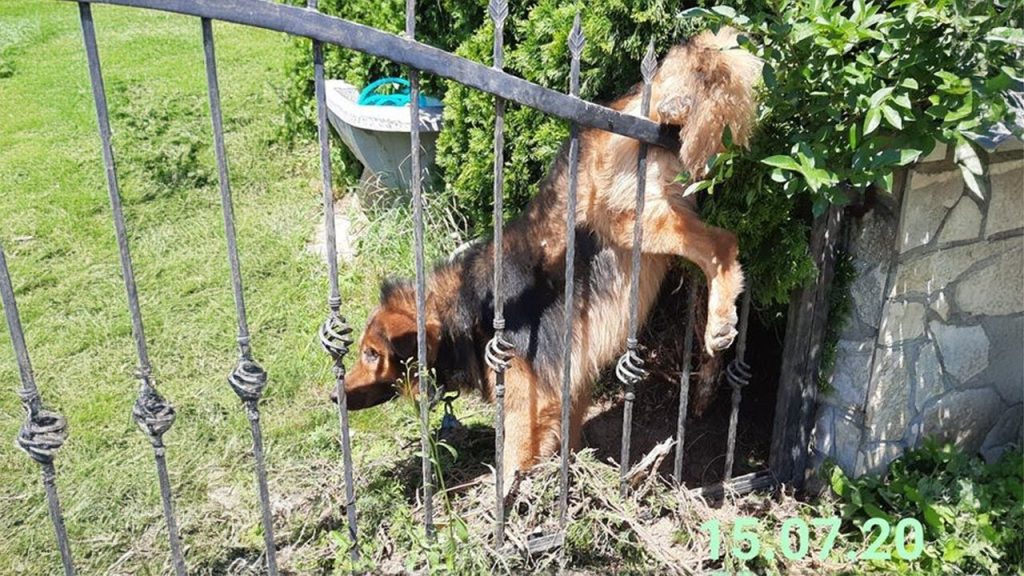
By the time rescuers arrived the following morning, the scene was almost too much to bear. The dog had been hanging there for hours, his body weakened by dehydration and exhaustion. The intense heat had drained what little strength he had left, and he had already lost a significant amount of blood. His breathing was shallow. His body trembled. Yet even in such overwhelming distress, he found the strength to gently wag his tail. It was not a gesture of joy, but a fragile plea for help—a silent signal that he had not given up.
Carefully and swiftly, the rescue team worked to free him from the fence, mindful of the deep injury and his unstable condition. Every movement required precision. Once released, he was immediately transported to an emergency veterinary clinic. There was no time to waste. His life hung in the balance.
At the clinic, his condition deteriorated rapidly. Overwhelmed by trauma and blood loss, he slipped into a coma. Medical imaging and examinations revealed a long, deep wound across his abdomen where the stake had penetrated. The damage was severe, and the risk of infection was high. The veterinary team understood that survival would depend on immediate surgical intervention and constant monitoring afterward.
Although the dog was wearing a collar—clear evidence that he belonged to someone—no owner came forward. No phone call. No inquiry. No sign that anyone was searching for him. In that absence, the veterinary staff and rescuers became his only advocates, determined to give him every possible chance.
Surgeons prepared for an emergency operation. The procedure was delicate and complex. They worked meticulously to repair internal damage, control bleeding, and reduce the risk of further complications. Throughout the surgery, his vital signs were closely monitored. His condition remained fragile, and every decision carried weight. The medical team knew they were not just treating a wound; they were fighting for a life that had already endured unimaginable suffering.
Following the operation, his recovery was uncertain. He remained in critical condition, surrounded by machines and compassionate caregivers who refused to give up on him. Severe swelling complicated his healing process. His body, still traumatized, struggled to perform basic functions. He was unable to urinate on his own and required a catheter to assist him. Each small sign of stability was treated as a quiet victory.
The days that followed were filled with watchful care and cautious hope. Veterinarians monitored his temperature, heart rate, and organ function around the clock. Pain management was carefully balanced to keep him comfortable without compromising his fragile state. Every breath he took felt like a testament to his resilience.
What stands out most in this story is not only the severity of his injury but the strength of his spirit. Even in pain, even suspended helplessly on that fence, he responded to rescuers with trust. That small wag of his tail spoke volumes. It reminded everyone present that beneath the trauma was a living being who wanted to survive.
For those who witnessed his rescue and ongoing care, the experience was both devastating and inspiring. It underscored the reality that accidents and neglect can place animals in life-threatening situations, sometimes without warning. It also highlighted the extraordinary dedication of rescue teams and veterinary professionals who step forward when others do not.
This dog’s journey is far from simple. Recovery from such a deep abdominal injury is long and uncertain. Complications can arise unexpectedly. Healing requires not only medical intervention but also patience, vigilance, and compassion. Yet his continued fight serves as a powerful example of endurance.
There is also a sobering lesson woven into his story. The presence of a collar suggests responsibility. Animals depend entirely on the humans who care for them. When they are left vulnerable—whether through oversight or circumstance—the consequences can be severe. His ordeal is a reminder of the commitment that comes with bringing a dog into one’s life. Safety, supervision, and proper care are not optional; they are essential.
At the same time, his rescue demonstrates the profound impact of kindness in action. Strangers chose to intervene. Veterinarians chose to operate despite uncertainty. Caregivers chose sleepless nights to monitor his progress. In moments when hope seemed fragile, dedication carried him forward.
Stories like this resonate deeply because they reflect both the vulnerability and resilience of animals. They remind us that suffering can exist quietly, unseen, until someone decides to look closer. They also remind us that compassion can alter the course of a life.
Today, as he continues to recover under careful supervision, his future remains guarded but hopeful. Each day brings new challenges, yet also new possibilities. His survival is not guaranteed, but his fight is undeniable.
Ultimately, this rescue stands as a testament to perseverance—the dog’s will to live and the unwavering efforts of those who refused to let him slip away. In the face of pain and uncertainty, compassion became his lifeline. And in that compassion, there is a quiet promise that even in the darkest circumstances, a second chance is worth fighting for.