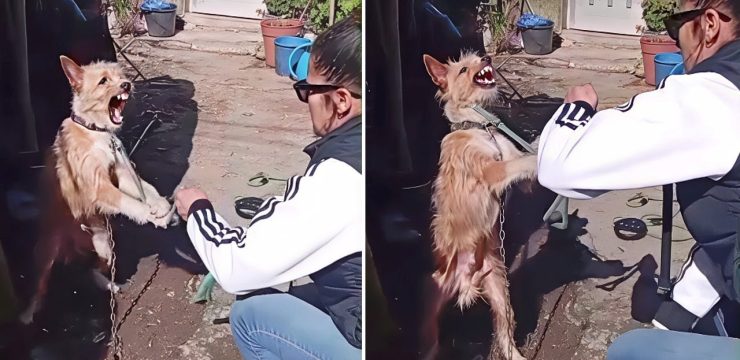
A quiet moment on a dusty roadside became the beginning of a second chance for a dog who had clearly endured far too much on his own. He stood there, large but withdrawn, his body language cautious, his eyes uncertain. The rescuers from The Moho approached slowly, understanding that trust is never given freely by an animal that has learned to survive without kindness. Instead of rushing, they offered him small pieces of meat, letting him decide whether to come closer. Hunger spoke louder than fear, and little by little, he stepped forward, accepting both the food and the first fragile thread of connection.
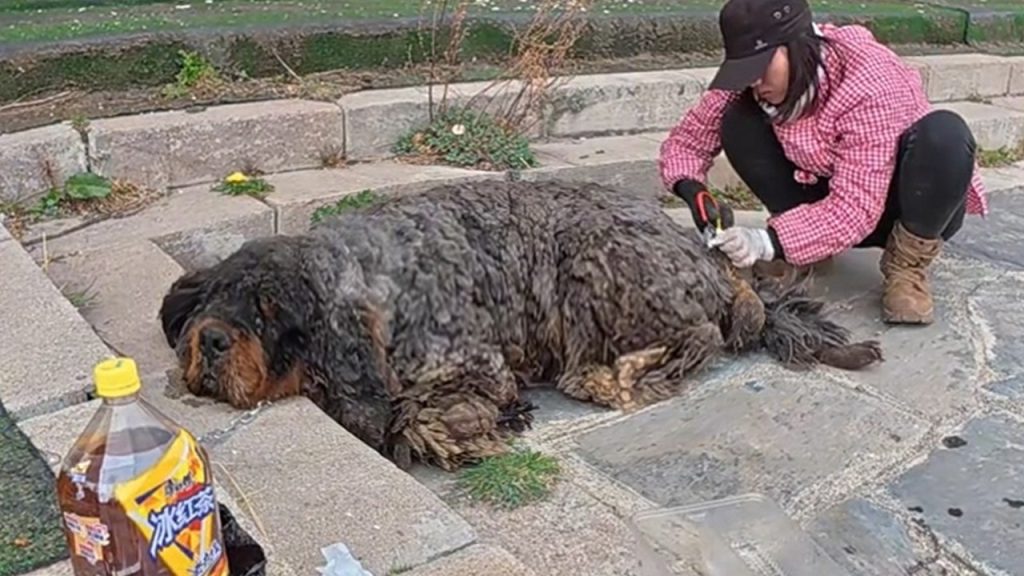
As they observed him more closely, concern quickly replaced relief. His face showed signs of serious neglect, especially around one eye, where a thick, fleshy growth obscured what they feared might be permanent damage. For a moment, it seemed possible that he had already lost the eye entirely. But rather than panic, the team remained calm and focused, knowing that a proper examination would reveal the truth. Their priority was clear: keep him comfortable, earn his trust, and get him the help he needed as quickly as possible.
The dog, later named Wuyi, was not only dealing with visible issues. His body told another story of quiet suffering. He struggled with severe constipation, a condition that often goes unnoticed in stray animals but can cause significant discomfort. The rescuers responded gently, administering a mild suppository to help relieve him. It was a small act, but one that spoke volumes about their attention to detail and commitment to his well-being. Every step they took was measured, thoughtful, and rooted in compassion.
Food became both comfort and encouragement. When they offered him a freshly made Chinese meat sandwich, he responded with surprising enthusiasm. It was a simple moment, yet deeply meaningful. Eating eagerly showed that beneath the exhaustion and fear, there was still a healthy appetite for life. It was a sign that his body, though weakened, had not given up.
The journey to proper care, however, was not easy. The distance to the clinic was not far by human standards, but for a dog in his condition, even a short walk under the heat could be overwhelming. Recognizing this, the team made the decision to transport him by car. It was another quiet choice that reflected their understanding of his limits and their desire to protect him from unnecessary strain. Every action was guided by one goal: reduce stress, increase comfort, and move him steadily toward recovery.
At the clinic, kindness continued to unfold. The owner, understanding the nature of rescue work, offered a generous discount to support Wuyi’s treatment. It was a reminder that compassion often extends beyond a single group, connecting people who believe in giving vulnerable animals a chance. The medical grooming process began carefully. Because fear can sometimes lead to defensive reactions, the staff ensured that Wuyi’s mouth was safely secured—not as punishment, but as protection for both him and the people helping him.
As the clippers moved through his thick, matted fur, the true extent of his condition began to reveal itself. Layers of dirt and neglect fell away, exposing skin that had been hidden for far too long. Under his chin, they discovered a mild infection, likely caused by constant drooling that had irritated the skin over time. His ears, when cleaned, released a strong odor, another sign that basic care had been absent from his life for a long while. None of these issues were beyond healing, but together they painted a clear picture of how much he had endured alone.
Despite everything, Wuyi remained remarkably cooperative. There was a quiet resilience in him, a willingness to accept help even if he did not fully understand it yet. The team worked patiently, giving him breaks when needed, speaking softly, and maintaining a calm environment. Bit by bit, the transformation took shape—not just physically, but emotionally.
When the grooming was complete, the difference was striking. His body, once hidden beneath tangled fur, now looked lighter, cleaner, and more comfortable. Medical treatments were applied to soothe his skin, followed by a thorough bath that washed away the last traces of grime. For the first time in a long time, he could feel air against his skin without discomfort.
To keep him warm and secure, they dressed him in a soft purple outfit. It was a simple garment, but it symbolized something much larger: care, dignity, and a new beginning. His posture changed subtly. The tension that once defined his stance seemed to ease. He looked calmer, more at peace, as if his body finally recognized that it was safe to relax.
The journey did not end at the clinic. Back at the rescue base, the team prepared a quiet space just for him. They set up a windproof tent, giving him a protected area where he could rest without disturbance. It was not just about shelter—it was about creating a sense of security, a place where healing could continue without fear.
Wuyi lay down in his new space, no longer on alert, no longer searching for danger. The road ahead would still require time, patience, and ongoing care. But the hardest part—the moment of being seen, helped, and protected—had already happened.
Sometimes, the most powerful transformations begin with something as small as a piece of food offered with kindness. For Wuyi, that moment opened the door to everything that followed: relief, treatment, comfort, and the possibility of a life no longer defined by survival alone.
And in that quiet tent, surrounded by people who chose not to look away, a once-forgotten dog finally had the chance to rest, heal, and begin again.