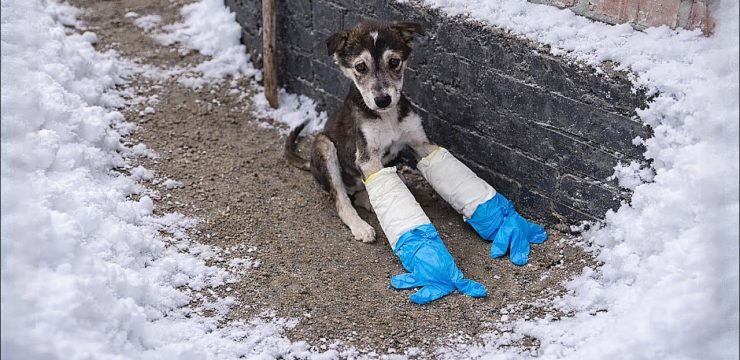
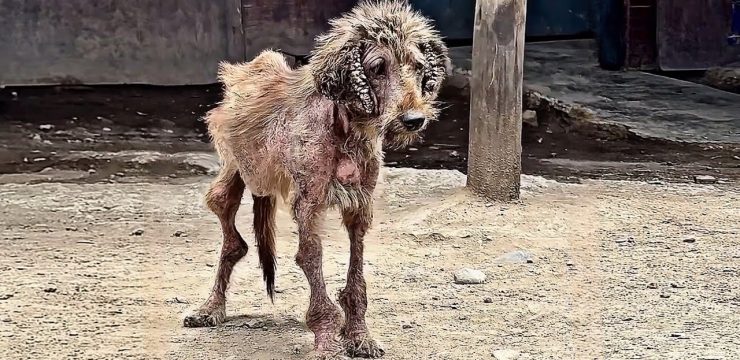
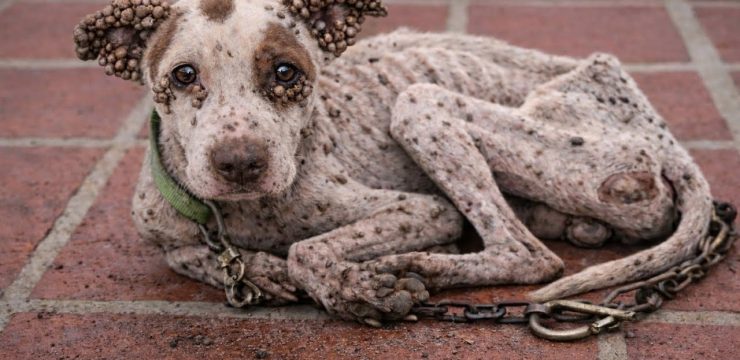
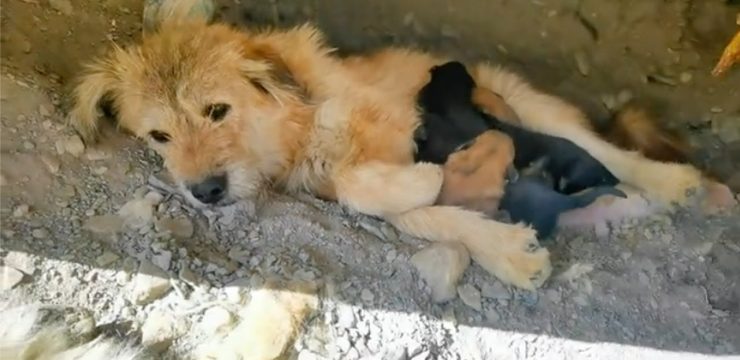
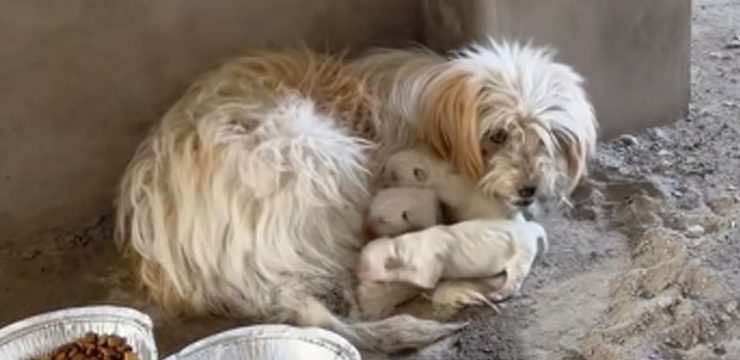
Three helpless dogs—Bombom, Borboja, and Belota—were left locked inside a house for more than a month without food or water. The silence behind those closed doors hid unimaginable suffering. It wasn’t until a concerned neighbor sensed that something was terribly wrong and called for help that their ordeal finally came to light. By then, they were only days away from losing their lives.
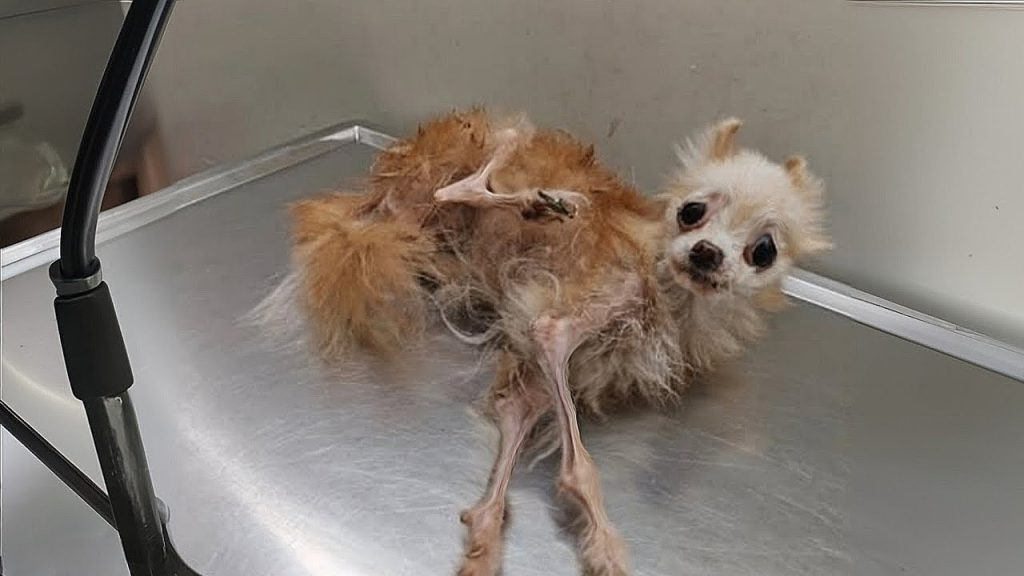
When rescuers entered the home, what they found was heartbreaking. The dogs were severely malnourished, their bodies weakened by prolonged starvation and dehydration. The air felt heavy with neglect. Each of them bore the physical evidence of being forgotten for far too long. Yet even in their fragile state, there was a flicker of life—a quiet will to survive.
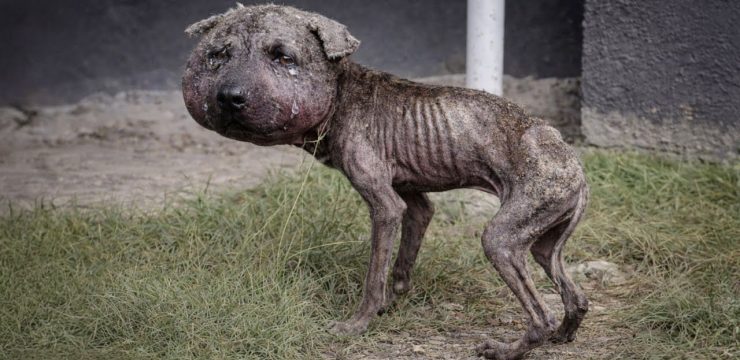
Bombom was in the most critical condition. His small frame had wasted away to the point that his bones pressed visibly against his thinning skin. He no longer had the strength to stand. He could not bark. Even lifting his head appeared to require enormous effort. His eyes, dull with exhaustion, told a story of suffering that words could never fully capture. Veterinary professionals who examined him were stunned by how close he was to death. It was a miracle he was still breathing.
Borboja and Belota were also gravely ill, but they showed slightly more strength than Bombom. Their ribs were sharply defined, their muscles severely depleted. Every step they attempted seemed uncertain. Years of experience had prepared the rescue team for difficult cases, but this situation left even seasoned caregivers shaken. How had three living beings endured such isolation without basic nourishment? How had they survived for so long without anyone intervening?
The veterinary team moved quickly. Bombom was immediately placed under round-the-clock supervision. Intensive care became his lifeline. Specialized medications were administered to stabilize his fragile body. A carefully controlled feeding program was introduced, designed to prevent shock while slowly reintroducing nutrients into his starved system. Every meal had to be measured. Every response carefully monitored. His organs had been under extraordinary stress, and any sudden change could have been dangerous.
Days passed with cautious hope. There were moments when Bombom seemed too weak to continue. His body trembled from exhaustion. Yet the medical staff refused to give up. They adjusted treatments, offered gentle reassurance, and stayed by his side through the long hours of uncertainty. For them, saving him was not just a professional duty—it was a moral commitment.
Meanwhile, Borboja and Belota began responding more quickly to treatment. With steady nutrition, hydration, and compassionate care, their strength gradually returned. Their eyes regained brightness. Their movements became steadier. The transformation, though slow, was undeniable. Within weeks, both dogs had recovered enough to begin the next chapter of their lives.
Loving families stepped forward to adopt Borboja and Belota, offering them permanent homes filled with safety and affection. What once seemed impossible had become reality. From isolation and starvation to warmth and security, their journey reflected the powerful difference that responsible intervention can make.
Bombom’s path was longer and more uncertain. His body had endured the most severe damage, and recovery required patience beyond measure. Crossing the critical threshold was only the beginning. He needed time to rebuild muscle mass, restore organ function, and regain confidence. The emotional wounds of abandonment can linger long after the physical ones begin to heal.
Despite the challenges, Bombom made steady progress. Each day he showed small signs of improvement. He could lift his head more easily. He began to stand with assistance. His appetite, once nearly nonexistent, slowly returned under the careful supervision of his medical team. The fragility that once defined him gradually gave way to cautious resilience.
Adoption requests soon began arriving for Bombom as word of his story spread. People were moved by his survival and wanted to offer him a loving home. Yet his rescuers made a deliberate choice. They would not rush his transition. Bombom would remain under their care until he was fully healthy and strong enough to thrive in a permanent environment. He deserved more than survival; he deserved stability.
This case serves as a sobering reminder of how vulnerable animals are when entirely dependent on human responsibility. Neglect is not always loud or visible. Sometimes it hides behind closed doors, unnoticed until it nearly becomes fatal. But it also highlights the extraordinary impact of vigilance and compassion. One neighbor’s decision to act made the difference between life and death.
For those who care deeply about animal welfare, this story underscores the importance of community awareness. If something feels wrong, speaking up can save lives. Rescue organizations and veterinary professionals work tirelessly, but they rely on the courage of ordinary individuals to alert them when help is needed.
Bombom, Borboja, and Belota’s ordeal should never have happened. Yet their survival stands as proof that even in the darkest circumstances, recovery is possible when empathy replaces indifference. Healing may take time. Trust may need to be rebuilt. But with proper care and unwavering dedication, broken bodies and spirits can mend.
Today, two of these dogs rest in loving homes, surrounded by comfort. The third continues his careful journey toward full strength, protected by those who refused to give up on him. Their story is not only about neglect—it is about intervention, responsibility, and the quiet heroism of people who choose to act when others do not.
In a world that can sometimes feel overwhelming, stories like this remind us that compassion still matters. And sometimes, it is the simplest act—making a phone call—that changes everything.