A small stray dog was spotted wandering along a busy highway in the middle of a relentless rainstorm, her fragile body barely visible through sheets of wind and water. Cars rushed past, tires hissing against soaked pavement, while she staggered forward without direction. She was painfully thin, her ribs sharply defined beneath matted fur that clung to her frame. Rain had soaked her to the bone, leaving her trembling and exhausted. Wrapped tightly around her body was a piece of netting, digging into her skin with every step. One of her eyes appeared severely injured, clouded and inflamed, making it difficult for her to see the danger surrounding her.
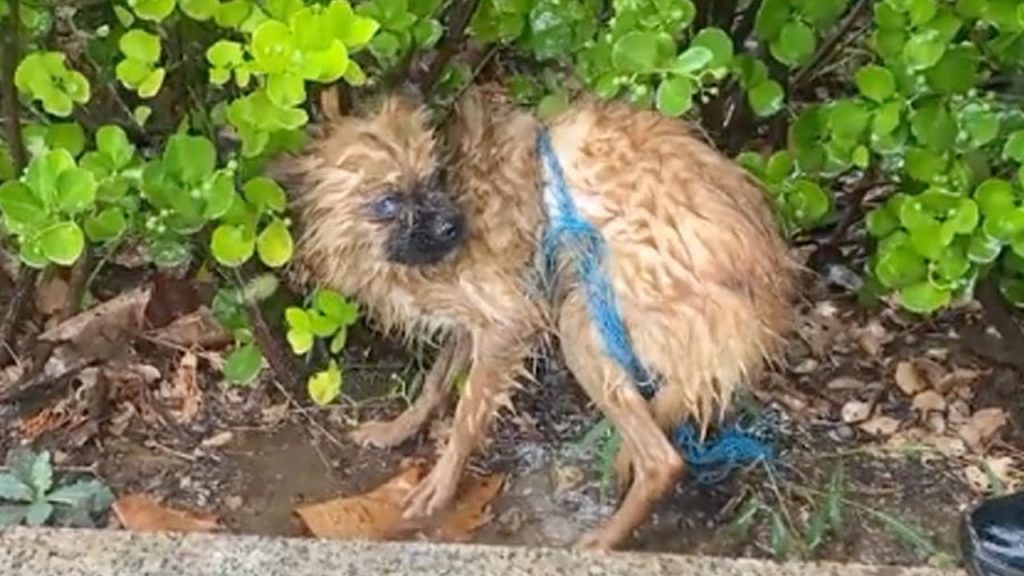
She did not run toward help. She did not bark. Instead, she kept her distance, wary of every movement. It took patience—nearly an hour of slow, careful effort—to gain even a flicker of trust. The rescuers moved gently, speaking in soft tones over the roar of traffic and rain. Each inch closer was a small victory. Her fear was not aggression; it was survival. She had likely learned that the world could not be trusted.
Eventually, soaked and shaking, she allowed herself to be guided away from the highway. That single decision may have saved her life.
Once safely transported to a veterinary clinic, the full extent of her condition became clear. She was suffering from severe malnutrition, her body deprived of consistent nourishment for far too long. More concerning was the diagnosis affecting her injured eye: Keratoconjunctivitis Sicca, commonly known as “dry eye.” This condition reduces tear production and can lead to chronic pain, infection, and even vision loss if left untreated. Without proper medical care, she could have lost her sight permanently.
Treatment began immediately. Veterinary staff carefully removed the netting that had constricted her body, cleaned her wounds, and started her on a controlled feeding plan to avoid overwhelming her weakened system. Specialized eye drops were administered multiple times a day to stimulate tear production and reduce inflammation. The process required consistency and close monitoring. Recovery would not happen overnight.
In the days that followed, something remarkable began to unfold. With regular meals tailored to her needs, her strength slowly returned. Her body, once frail and depleted, started to respond to proper nutrition. Within just one week, she gained nearly two pounds—a significant milestone for a dog who had been on the brink of collapse. The change was visible not only in her weight but in her posture. She stood a little taller. Her steps became steadier.
The transformation in her eyes was equally moving. The redness began to fade, and the cloudiness gradually cleared. The careful, repeated treatments paid off. By the third week, her eye condition had improved by approximately ninety percent. What once threatened to take her vision was now manageable. She could see clearly enough to explore her surroundings without hesitation.
Perhaps the most profound change was not physical, but emotional. The frightened, withdrawn dog who once avoided eye contact began to seek it. She started to wag her tail when familiar faces entered the room. Gentle hands no longer caused her to recoil. Instead, she leaned into affection as though rediscovering something she had long been denied.
Her recovery extended beyond medical milestones. She began interacting with other dogs, first cautiously, then playfully. The energy that had once been absent now surfaced in joyful bursts. Toys that once lay ignored were suddenly objects of fascination. Her personality—bright, curious, affectionate—emerged as her health stabilized.
For those who followed her journey, the change was nothing short of stunning. From a trembling figure on a rain-soaked highway to a dog capable of running and playing freely, her progress reflected what dedicated care and compassion can accomplish. She was no longer defined by fear or suffering. She was defined by resilience.
Today, she lives in a safe and loving environment, surrounded by people who consider her family. Regular veterinary checkups ensure her eye condition remains under control. Balanced meals keep her strong. She spends her days exploring, playing with her canine companions, and resting in comfort—simple joys that once seemed out of reach.
Her story serves as a reminder that many animals silently endure hardships we may never fully understand. Stray dogs often face hunger, injury, and exposure to harsh elements, yet they continue to survive with quiet determination. When given the chance, they respond to kindness with extraordinary loyalty and gratitude.
Rescue is not always dramatic. Often, it begins with patience—standing in the rain a little longer, speaking softly, refusing to give up. It requires medical knowledge, consistent follow-through, and above all, compassion. This dog’s journey illustrates how coordinated care, proper diagnosis, and unwavering dedication can reverse even severe conditions.
For readers who cherish animals, especially those who have welcomed rescue pets into their homes, her story resonates deeply. It reflects the belief that every life holds value, regardless of how broken it may appear. Healing may take time. Trust may take longer. But both are possible.
What began as a heartbreaking sight on a stormy highway has become a testament to hope. Her once-frightened eyes now reflect security. Her body, once frail, now moves with confidence. And her heart, once guarded, has opened fully to the love she deserves.