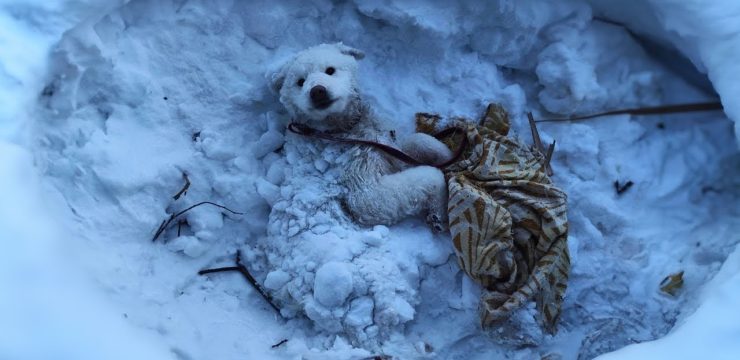
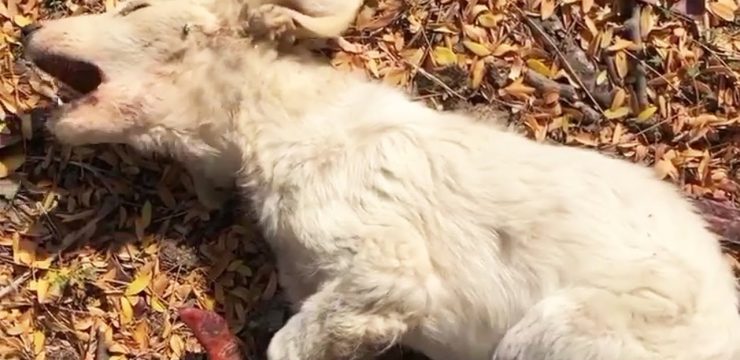
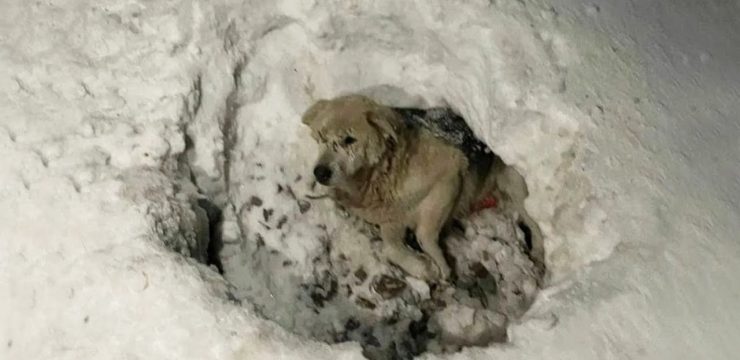
Lunka was only a year old when his life nearly came to an end in the most unforgiving way imaginable. Alone in the freezing snow, his small body trembled under the weight of pain and exhaustion. He had been abandoned after enduring a brutal beating, left with no shelter, no warmth, and no one to care whether he survived the night. The cold wrapped around him like a silent threat, and with each passing moment, his strength faded further.
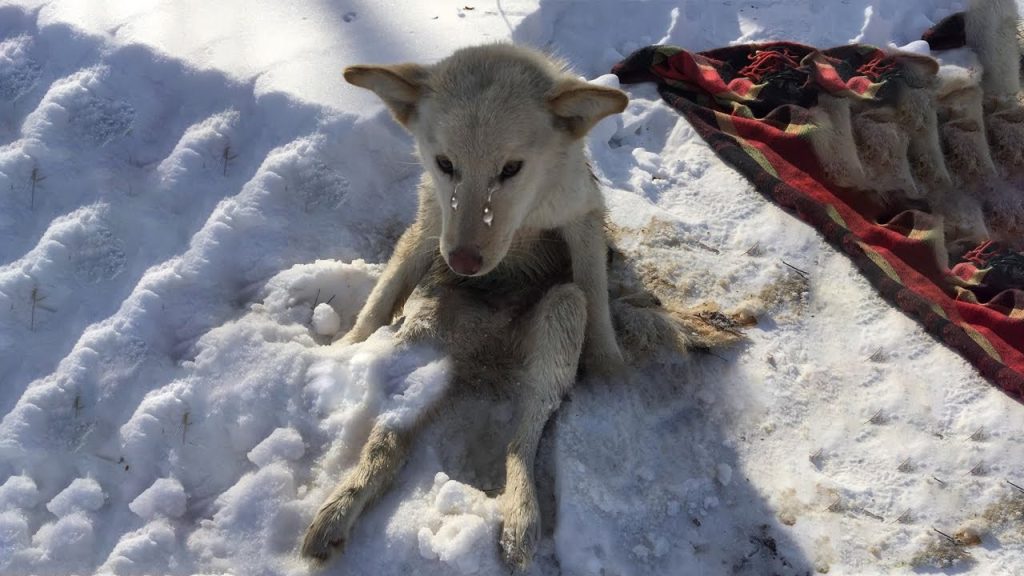
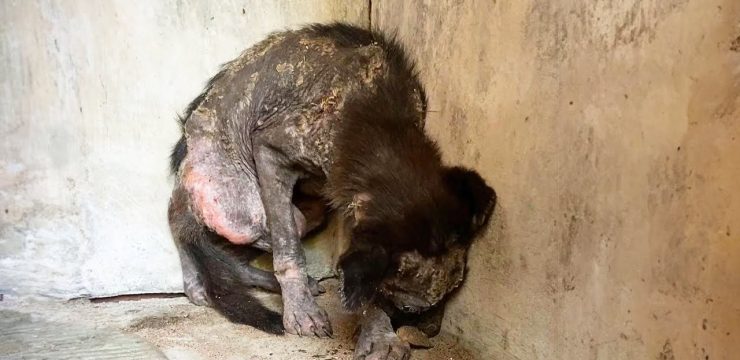
When he was finally found, his condition was heartbreaking. His fragile body was covered in visible injuries, his skin marked by deep wounds and sores that had gone untreated for far too long. He was too weak to move, too exhausted to even cry out. Every breath seemed like a struggle, as if his body was quietly giving up after fighting for far too long without help. It was the kind of sight that stops you in your tracks, the kind that makes you question how something so innocent could be left to suffer so much.
But in that moment, something changed.
A rescuer stepped forward, refusing to let Lunka’s story end there. With gentle hands and a determined heart, they carefully wrapped him in an old coat, trying to give him even the smallest sense of warmth and comfort. It wasn’t just about protecting him from the cold—it was about giving him a reason to hold on. Soft words were whispered, not expecting a response, but offering reassurance anyway. In that quiet exchange, something unspoken passed between them: a promise that he wouldn’t be alone anymore.
The first night was uncertain. Lunka hovered between life and something far more fragile, his body barely responding as he was carried to safety. But even in that weakened state, there was a faint spark—something deep within him that refused to completely fade. It was not strength in the usual sense. It was quieter than that, more delicate, but just as powerful.
The journey that followed was anything but easy.
Over the next several months, Lunka faced a long and difficult road to recovery. His injuries required careful, consistent medical attention. Every treatment brought discomfort, every small step forward came with its own challenges. There were days when progress seemed almost invisible, when it felt like the distance between where he was and where he needed to be was too great to overcome.
Yet, somehow, he kept going.
There was a resilience in him that couldn’t be measured by physical strength alone. It showed in the way he responded to care, in the way his eyes slowly began to hold a little more awareness, a little more life. It appeared in the smallest movements—a shift of his head, a slight attempt to stand, a moment of recognition when he realized he was safe.
Those moments mattered.
They became the foundation of something larger, something stronger than the pain he had endured. Each day added another layer to his recovery, another quiet victory that built upon the last. The people caring for him never rushed the process. They understood that healing, especially after such hardship, takes time. It requires patience, consistency, and above all, compassion.
And Lunka responded to all of it.
Gradually, his body began to change. The wounds that once defined him started to heal. His strength, though slow to return, grew steadier with each passing week. The trembling that once consumed him softened, replaced by a cautious curiosity about the world around him. He was no longer just surviving—he was beginning to live again.
Time passed, marked not by dramatic breakthroughs, but by steady, meaningful progress.
Then came the moment that made everything worthwhile.
After 150 days of care, effort, and unwavering support, Lunka stood on his own. It wasn’t just a physical milestone—it was a symbol of everything he had overcome. The same dog who had once been unable to move in the cold now found his footing with quiet confidence. And then, as if rediscovering something he had almost lost forever, he began to run.
There was joy in that movement, a lightness that hadn’t existed before. His steps were no longer weighed down by fear or pain. Instead, they carried a sense of freedom, of possibility. He jumped, he explored, and in those simple actions, he reclaimed a life that had nearly been taken from him.
It’s easy to see stories like Lunka’s as extraordinary, but at their core, they are built on something very simple. Care. Kindness. The willingness of someone to step in when it matters most. Without that moment of compassion in the snow, his story would have ended very differently.
What makes his journey so powerful isn’t just the recovery itself. It’s what it represents.
It shows that even in the darkest circumstances, change is possible. That even when everything seems lost, there can still be a path forward. And perhaps most importantly, it reminds us that small acts of love can have lasting, life-changing impact.
Lunka didn’t survive because the world suddenly became kinder. He survived because someone chose to make a difference when it mattered most.
And in doing so, they gave him something far greater than rescue.
They gave him a second chance.