The streets of Houston are home to many stories of hardship—some seen, many unseen. But the case of Jericho, an elderly and emaciated dog found discarded and suffering in one of the city’s most notorious areas for animal neglect, shocked even the most experienced rescuers. His journey, captured in this video, is not just about survival. It’s about compassion, injustice, resilience—and the promise of a better tomorrow.
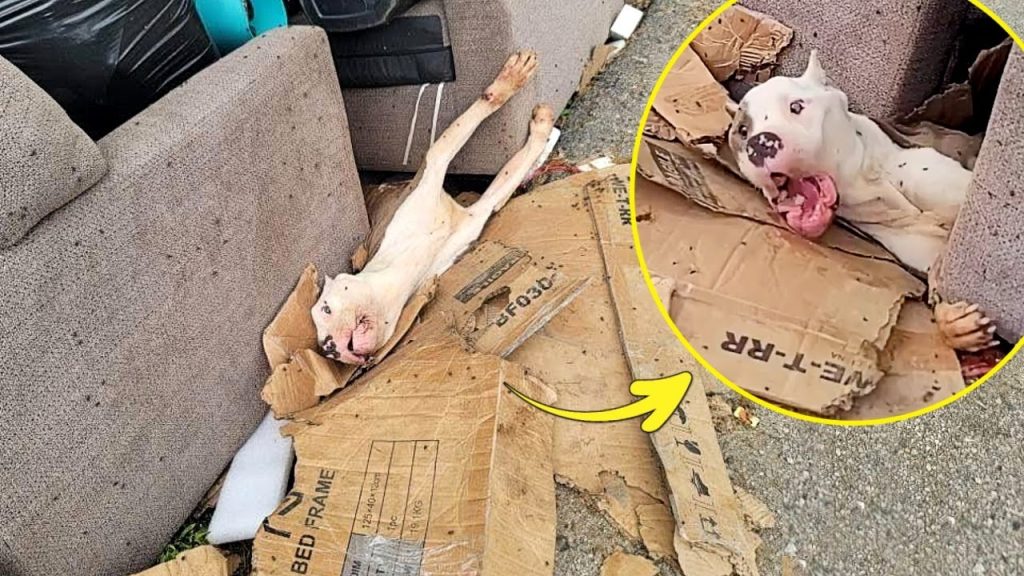
Jericho was discovered in Houston’s infamous “Corridor of Cruelty,” a stretch of road marked by frequent cases of abuse, neglect, and abandonment. Street feeder Ja Nell Mitchell was making her routine rounds when she came across what looked like a pile of trash. But beneath an old, discarded couch and surrounded by debris, something moved. A closer look revealed Jericho—motionless, weak, and barely alive.
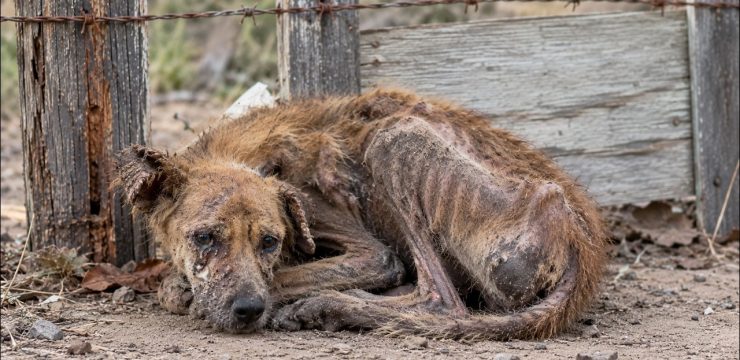
His body was covered in flies, and maggots had already begun to feast on his open wounds. His eyes, clouded with severe cataracts, could barely focus. Emaciated to the point of near collapse, he had clearly been there for days, maybe longer. It was evident he hadn’t just been forgotten—he had been deliberately trapped under that couch, abandoned without any chance of escape.
For over an hour, Ja Nell and her team worked carefully to free him, mindful that any sudden movement could worsen his injuries. Despite the pain, Jericho didn’t resist. He didn’t cry or whimper. It was as if he had already accepted his fate. But help had finally arrived. They lifted him out with gentle arms and rushed him to the Vergi 24/7 Emergency Hospital, praying they weren’t too late.
At the hospital, the reality of Jericho’s condition became painfully clear. While scans showed no major damage to his spine, he exhibited no deep pain reflexes in his hind legs—a possible sign of prolonged immobility or nerve damage. His entire body bore the marks of long-term neglect: open, raw sores; patches of fur missing; and the heavy presence of heartworm, an all-too-common condition in neglected dogs of the region.
To make matters worse, the cataracts had left him nearly blind. Traditional medical treatments offered only limited hope. The team faced a heart-wrenching decision: to pursue aggressive treatment with slim chances, or to focus on giving him comfort, dignity, and a life free of suffering. They chose compassion.
Jericho’s treatment shifted toward holistic care. One of the first interventions was acupuncture—a delicate and often painful therapy that uses fine needles to stimulate the nervous system, improve circulation, and help the body heal. Though uncomfortable at first, Jericho endured it with a quiet strength. His body began to respond. Little by little, the spark returned to his spirit.
Within just a few days, Jericho began to eat again. With each meal, he grew stronger. His weight began to increase, and his eyes—though clouded—held a soft glimmer of trust. The hospital staff, moved by his determination, rallied around him with unwavering support.
Four days after his rescue, Jericho was deemed stable enough to be released into a medical foster home. There, his transformation continued. With the assistance of a supportive sling, Jericho took his first steps—slow, wobbly, but filled with hope. The fact that he could still move his legs and had retained some muscle tone surprised everyone. His nerves were not as damaged as initially feared.
His foster mom embraced him with the love and tenderness he had been denied for so long. She fed him warm meals, helped him with physical therapy, and gave him a safe place to rest. Jericho began to blossom. The dog who once lay silently beneath a pile of refuse now wagged his tail, responded to touch, and nuzzled into the arms of his caregivers.
Each day brought new signs of progress. Though his journey remains far from over, Jericho is now a living testament to what care, patience, and love can do—even for those abandoned by the world. His recovery has been slow but steady. With each small milestone—every bite of food, every step taken, every nuzzle shared—Jericho reminds us of the strength that lives in even the most broken hearts.
His story is not just a miracle of medicine. It’s a reminder that no being deserves to be thrown away. The cruel conditions in which Jericho was found are not isolated. The “Corridor of Cruelty” continues to be a heartbreaking symbol of systemic neglect in Houston. And while Jericho is now safe, hundreds of other animals remain at risk—voiceless and invisible to most.
The rescue organization behind Jericho’s salvation has urged local authorities to follow through on their promises to investigate the area, prosecute offenders, and create meaningful change. They hope that Jericho’s story will shine a light on the dark corners of this ongoing crisis and inspire others to speak out, volunteer, or donate to help these forgotten animals.
In the meantime, Jericho continues to receive care, wrapped in warm blankets, nourished by healthy food, and surrounded by gentle voices and healing hands. His future is no longer one of loneliness and pain, but of possibility.
For those who have followed his story, Jericho is more than a rescue dog. He is a symbol of grace, endurance, and the unwavering will to live. He reminds us that no matter how dire the situation, hope can still be found—even beneath a discarded couch on a forgotten street.
And perhaps, in helping to save Jericho, we also save a part of ourselves—the part that believes every life has value, and that kindness can change the world, one soul at a time.