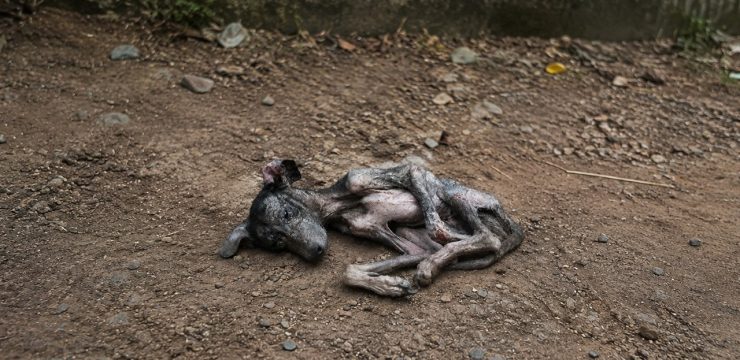
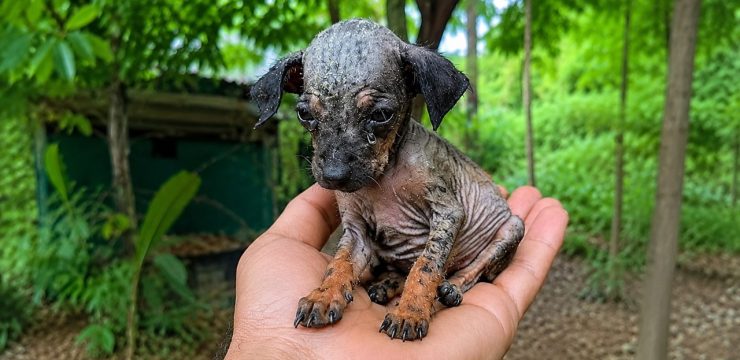
Some stories have a way of stopping you in your tracks. Not because they are easy to read, but because they remind you of something essential — that resilience does not belong only to humans. It lives in the hearts of animals too, quietly and fiercely, waiting for someone to believe in it.
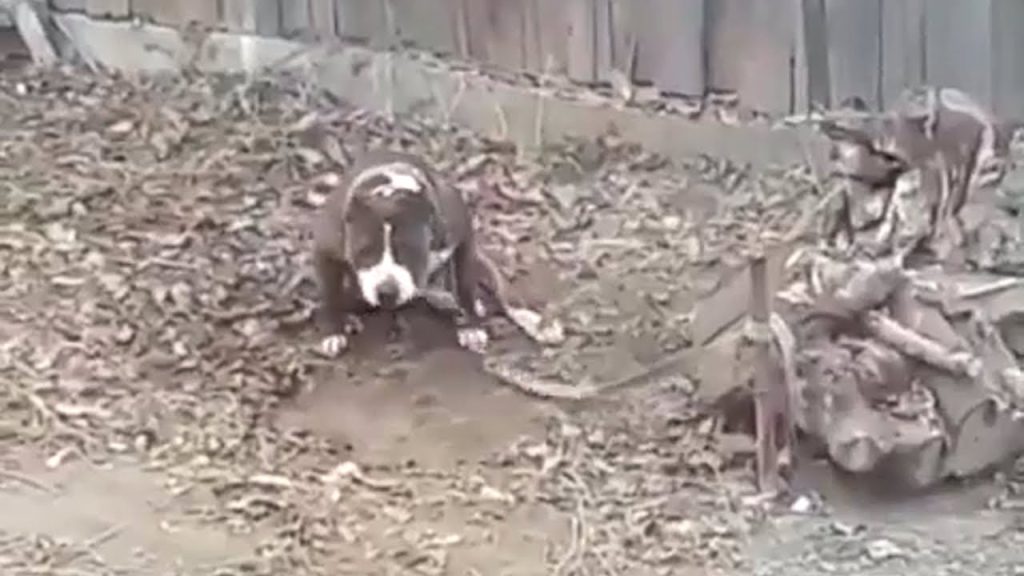
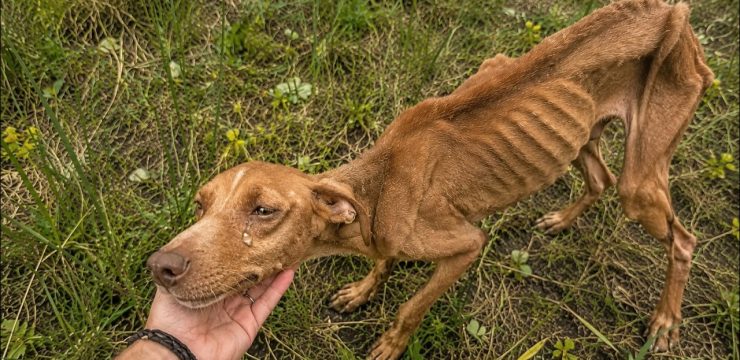
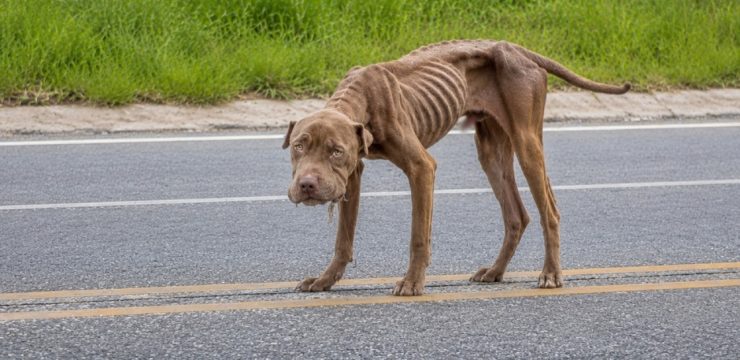
This is the story of Atrey, a dog who was found in one of the most heartbreaking conditions imaginable. Completely paralyzed in his hind legs, unable to stand, unable to walk, and robbed of the simple dignity every living creature deserves — Atrey had spent months tied up and abandoned by the people who were supposed to care for him. When rescuers from the channel “Dogs Are Family” found him, his body had already begun to shut down from prolonged immobility and neglect. His back legs had lost all function. His muscles had wasted away. And yet, somehow, the light in his eyes had not gone out entirely.
That small flicker of life was all his caregivers needed to begin one of the most dedicated rehabilitation journeys ever documented.
The road to recovery for Atrey was not quick, and it was never easy. Every single day required patience, consistency, and an unshakable belief that this dog — despite everything that had been done to him — still had a full life waiting ahead. His team of caregivers began with deep tissue massage, working carefully through the tightened muscles and stiffened joints that had locked up after months of disuse. These sessions were not just physical treatments. They were moments of connection, of human hands gently saying to a frightened, broken animal: You are safe now. We are here.
Stretching exercises followed, slowly coaxing movement back into limbs that had forgotten how to move. The work was painstaking, requiring the kind of repetitive, deliberate effort that most people would find discouraging without visible results in the early days. But Atrey’s team never gave up. Vocal encouragement filled each session — soft words, cheerful tones, the kind of reassurance that communicates love even across the barrier of species.
To help Atrey begin experiencing the sensation of movement without the full burden of his own weight, his caregivers introduced a specially fitted wheelchair. Watching a dog move with the assistance of a wheeled support can be both humbling and deeply moving. For Atrey, it was more than mobility assistance — it was a doorway back into the world. It gave him the ability to explore, to engage, and to remember what it felt like to be a dog who moves through life with purpose.
Perhaps the most transformative element of his rehabilitation was hydrotherapy. In the warm, buoyant environment of a therapy pool, Atrey was gently guided through water exercises that allowed his muscles to rebuild strength without placing painful stress on his recovering joints. Water has a remarkable way of supporting what land cannot yet hold. In the pool, Atrey was able to practice the motion of walking — his legs working through resistance, his body slowly remembering its own natural mechanics — while the water carried what his muscles were not yet strong enough to bear alone.
Week after week, the smallest signs of progress became cause for celebration. A twitch in a hind leg. A reflexive response when his paw was touched. The tentative shift of weight from one back leg to the other. For anyone who has ever loved a dog, these moments are not small at all. They are everything.
What makes Atrey’s story particularly powerful is not just the physical transformation — it is the emotional one. Animals who have been neglected and abandoned often carry deep psychological wounds alongside their physical injuries. Trust, once broken, does not return easily. And yet, through consistent love, patient care, and the unwavering dedication of his rescue team, Atrey began to bloom. His personality emerged. His tail began to wag with confidence. His eyes, once dulled by suffering, grew bright with curiosity and joy.
By the time his recovery had progressed enough to document meaningful results, the dog captured on camera was almost unrecognizable from the one who had been found helpless and forgotten. Atrey was seen joyfully chasing a ball, his whole body animated with the pure, uncomplicated happiness that dogs do better than almost anyone. His left leg remains slightly weaker than his right, and there is still a gentle hitch in his stride that may never fully disappear. But watch him run — or try to run, with that wonderful, lopsided enthusiasm — and you will not see a disabled dog. You will see freedom.
You will see what happens when someone refuses to give up on a life that the world had already written off.
For those of us who have loved a dog, who have felt the weight of a furry head in our lap or the joy of a tail wagging just because we walked into the room, Atrey’s story lands somewhere deep. It is a reminder that love expressed through consistent action can heal wounds that seem irreparable. It is proof that second chances are real, and that the capacity for joy, even after great suffering, is remarkably difficult to extinguish.
Atrey did not just recover. He came back to life — and in doing so, he reminded all of us what it truly means to never give up.