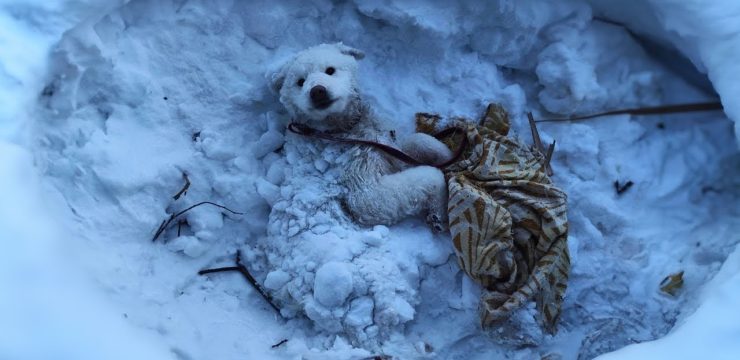
Somewhere along a busy road, a small dog was struck by a vehicle — and the driver never stopped. That single, devastating moment changed everything for Kimgun, a two-year-old girl whose life was nearly stolen from her before it had truly begun.
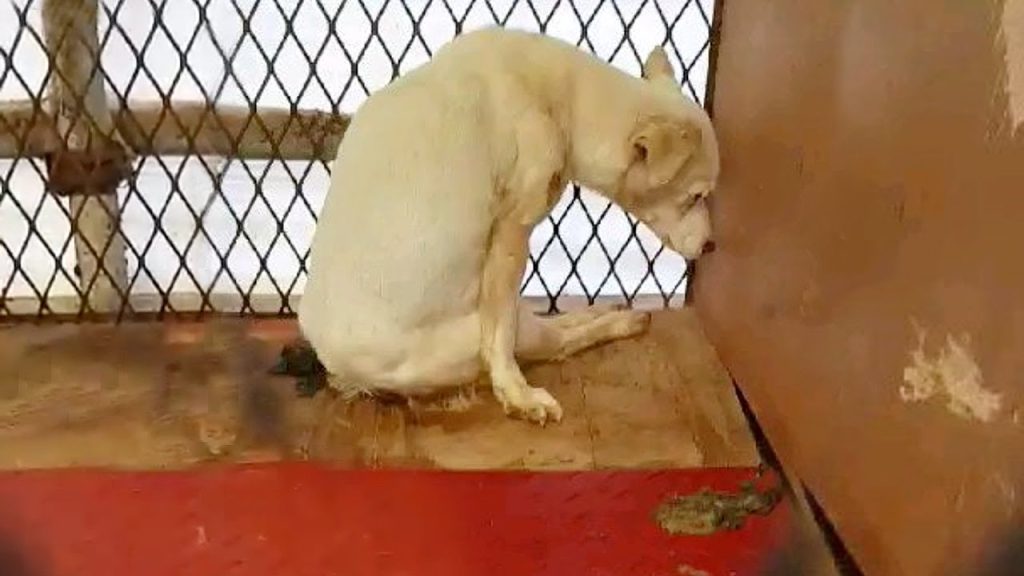
When rescuers found her, the damage was heartbreaking. Kimgun had suffered a severe spinal fracture that left her hind legs completely paralyzed. The window for emergency nerve repair — a narrow 48-hour period that could have changed the outcome — had already passed. The paralysis in her lower body was permanent. She would never regain feeling in her hind legs. She would never be able to go to the bathroom on her own. And at just two years old, she was facing the rest of her life in a body that had been broken by someone else’s carelessness.
But the physical injuries were only part of the story.
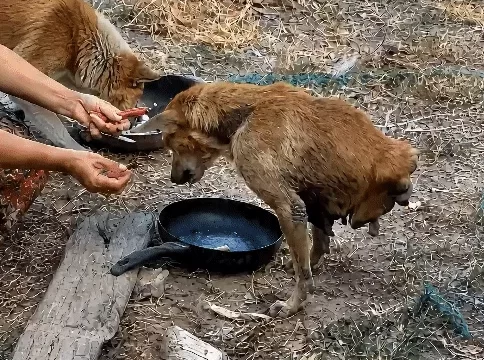
When volunteers first approached Kimgun, she flinched. She trembled. She pulled away from every hand that reached toward her. Her eyes, filled with a deep and quiet fear, told a story that went far beyond the accident. This little girl had known cruelty before. Long before the hit-and-run, someone had already taught her that humans were not safe — that kindness was not something she could count on. The trauma she carried was layered, old, and buried deep in her bones.
She was severely underweight. She was in constant pain. And she had every reason in the world to believe that no one was coming to save her.
Her rescue team saw all of this — and they stayed anyway.
The medical reality was clear and difficult to accept. The nerves in Kimgun’s lower spine were gone. No surgery could bring them back. No amount of time or therapy would restore what had been lost. Her paralysis was not a temporary setback; it was her new reality. But the rescuers made a decision that reflected something deeper than medicine — they chose to give her the best possible life within that reality.
Surgeons proceeded with a corrective procedure — not to reverse the paralysis, but to straighten her spine. The injury had left her backbone in an unnatural position, one that would cause ongoing discomfort and make mobility aids nearly impossible to use. By carefully realigning her spine, the surgical team gave her something essential: a body that could one day sit upright, move forward, and live without constant pain.
It was a gift given entirely on faith — faith that Kimgun would one day be ready to receive it.
The weeks that followed were slow and tender. Volunteers sat with her, spoke softly, offered gentle hands and patient hearts. Little by little, Kimgun began to lower her guard. The trembling became less frequent. The flinching gave way to cautious curiosity. A dog who had every reason to hate the world was quietly, carefully, choosing to trust it again.
And then came the wheelchair.
When Kimgun was fitted with her custom-built cart for the first time, she wasn’t sure what to make of it. She stood still. She tested the resistance. She looked around with wide, uncertain eyes — and then something shifted. She took a step. Then another. The wheels rolled beneath her, and for the first time since the accident, Kimgun was moving on her own terms.
It was more than mobility. It was dignity.
Alongside the wheelchair, her care team introduced a dedicated physical therapy routine designed to strengthen her core and build endurance in her upper body. Day by day, session by session, Kimgun grew stronger. She learned to navigate corners. She picked up speed in open spaces. She discovered that the world — the same world that had once hurt her so badly — was also full of open pathways and warm hands and people who genuinely delighted in watching her go.
The transformation that followed was nothing short of extraordinary.
The dog who had once trembled at a stranger’s touch began seeking out affection. The dog who had lived in fear began approaching volunteers with a wagging tail and bright, curious eyes. Kimgun was not simply surviving her circumstances — she was thriving inside them, meeting every day with the kind of joyful resilience that has a way of humbling everyone around her.
She will never walk the way she once did. She will always need extra care, extra time, and extra love. But watching her zip through the rescue center on her little wheels, ears flopping in the breeze and tail sweeping side to side, it becomes impossible not to feel something loosen in your chest — some quiet, stubborn knot of worry about whether life, after great pain, can still be good.
Kimgun answers that question every single day.
Her story is a reminder that recovery does not always mean returning to what was. Sometimes it means building something entirely new — a life shaped around what remains, held together by the people who refused to look away, and carried forward on four small wheels and an unbreakable spirit.